

Hot Shot Dispatch Software: What a Hot Shot Carrier Actually Needs to Run Loads
Hot shot dispatch software for small carriers: what a 1 to 20 truck hot shot fleet actually needs to set up loads, track trucks, and keep paperwork tight.
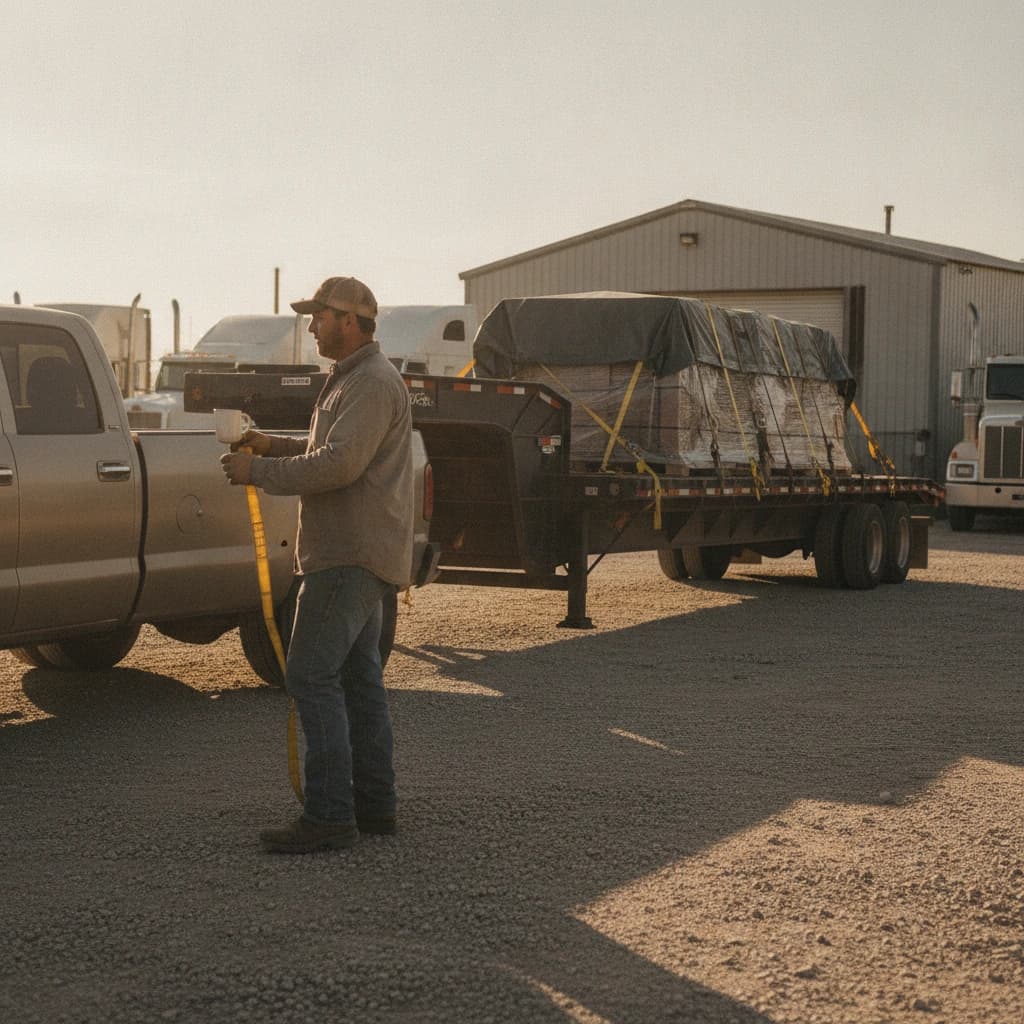
Hot shot work runs on speed. A broker posts an expedited load at 7 a.m., it needs to be picked up by 10, and the carrier who confirms first and gets a truck rolling is the one who gets paid. That pace is the whole appeal of hot shot trucking, and it is also exactly why the back-office side falls apart so easily.
Most hot shot carriers start with one dually and a gooseneck, then grow to three or five trucks before anyone stops to think about systems. The dispatcher, who is often also the owner and sometimes also a driver, is running the entire operation out of a phone, a load board, and a notes app. It works until it doesn't.
This is a plain look at what hot shot dispatch software actually needs to do for a small carrier, what to ignore, and how the right tooling keeps a fast operation from collapsing under its own paperwork.
What makes hot shot dispatch different
Hot shot trucking is its own animal. You are usually running Class 3 to Class 5 trucks, mostly one-ton duallies pulling 40-foot gooseneck or bumper-pull flatbeds, hauling loads that are too urgent or too small for a full semi. Think a pallet of construction materials from Houston to a job site in Midland, or a piece of oilfield equipment that has a rig crew standing around waiting for it.
A few things separate hot shot dispatch from regular truckload work:
- Speed of confirmation. Hot shot loads move fast and the windows are tight. The time between seeing the load and confirming it can decide whether you win it.
- High load turnover. A hot shot truck might run two or three short loads in a day instead of one long haul. That means two or three times the rate confirmations, pickups, and deliveries to track.
- Thin margins per load. Hot shot rates can be strong on the right lane, but the loads are smaller, so a single bad detention claim or a rejected invoice hurts more.
- Owner-operator reality. The person dispatching is frequently the same person who owns the trucks and signs the personal guarantee on the truck note. There is no back office to absorb mistakes.
Software built for a 200-truck reefer carrier assumes a staffed office, a dedicated billing department, and a six-figure budget. None of that matches a five-truck hot shot outfit. The need is different, and so is what good looks like.
The real bottleneck: setting up the load
Ask any hot shot dispatcher where the day disappears and the honest answer is data entry. Every confirmed load starts with a broker rate confirmation, a PDF that lists the customer, the origin, the destination, the miles, the rate, the pickup window, the delivery window, and the dispatch contact. Before a wheel turns, somebody has to read that PDF and type all of it into wherever the loads live.
On a slow truckload operation that is annoying. On a high-turnover hot shot operation it is a genuine bottleneck, because you are doing it five or six times a day, often while a driver is calling about the last load and a broker is texting about the next one. That is exactly how a delivery window gets transposed and a truck shows up a day early to a dock that is not ready for it.
Picture a normal Tuesday. A broker sends a rate con for a load of structural steel out of a yard in Beaumont going to a site outside San Antonio, 290 miles, 875 dollars, pickup by noon, delivery first thing Wednesday. Five minutes after you finish typing it in, a second broker emails two more: a pallet of fittings from Conroe to Tyler and an oilfield skid from Odessa that a rig crew is waiting on. Now you are three rate cons deep before 9 a.m., each one a small wall of customer names, addresses, mileages, and appointment windows, and every minute you spend keying them in is a minute you are not confirming the next load or answering the driver who just texted "where am I going after this." That is the grind hot shot software has to kill, because the typing scales with your load count, and load count is the whole point of hot shot.
Howdy Dispatch attacks that bottleneck directly. The dispatcher uploads the broker rate confirmation PDF, and the AI dispatch platform reads it and pre-fills the load: customer, origin, destination, mileage, rate, pickup and delivery times, and broker contact. It auto-matches the customer, driver, and truck against your address book and runs address validation on the origin and destination. The dispatcher reviews it and saves. Five to ten minutes of typing turns into about twenty seconds of checking.
One thing to be clear about: the AI removes the typing, it does not pick your loads or set your rates. You decide what to run and what to turn down. The software just stops making you a data-entry clerk for the privilege.
What a hot shot carrier actually needs from dispatch software
Strip away the enterprise feature lists and a small hot shot fleet needs a short list of things to actually work. Here is the honest version.
Fast load setup. Covered above. If it takes longer to enter the load than to confirm it, the tool is fighting you.
A driver app the driver will actually open. Hot shot drivers are not going to fight with clunky software at a pickup. They need one-tap pickup with a load photo, manifest photo capture, and one-tap delivery with a delivery photo, with a push notification when they get assigned a load. Howdy Dispatch ships the iOS driver app as part of the platform, not as a separate product you have to bolt on. That matters, because a dispatch tool with no driver side just turns the dispatcher into the middleman for every status update.
Live truck visibility. When a broker calls asking where the truck is, you should be able to look at a map instead of calling the driver and interrupting him at 70 miles an hour. Continuous GPS tracking on the HQ map means you answer the broker in five seconds and the driver never gets bothered.
Paperwork that does not get lost. This is the one that quietly costs hot shot carriers the most money. A broker disputes an invoice three weeks later and asks for the BOL. If the proof is in some driver's phone in a deleted text thread, you eat the loss. Per-load document storage, where every rate con, pickup photo, manifest, and delivery photo lives attached to the load forever, is what lets you win that dispute instead of swallowing it.
Pricing that fits a small fleet. Enterprise TMS platforms run 30,000 to 60,000 dollars a year and assume a back office to run them. A hot shot carrier with five trucks cannot and should not pay that. The tooling should be priced for the size of the operation.
What you do NOT need (and what we are not)
Just as important is knowing what to ignore, because half the "trucking software" pitches aimed at small carriers are selling things a hot shot fleet does not need yet, or things the vendor cannot actually deliver.
A quick, honest set of non-claims about Howdy Dispatch, because the trade is full of overpromising:
- We are not an ELD. Hot shot drivers over the relevant thresholds still need a compliant electronic logging device and hours-of-service tracking from a certified provider. Dispatch software is not that, and any tool that blurs the line is one to be careful with.
- We are not a freight broker or a carrier of record. We do not find you loads or take a cut of your freight. You run your own authority and your own broker relationships.
- We do not do route optimization or autonomous dispatching. The dispatcher decides which loads to take and how to run them. The software handles the busywork around that decision, not the decision.
- We do not verify FMCSA authority, safety scores, or insurance, and we are not tax, legal, or compliance advice.
Naming this matters because a five-truck hot shot operation does not have the slack to discover a tool quietly does less than the sales page implied. The features that earn the work are the boring, reliable ones: load setup, a driver app, live tracking, and paperwork that holds up.
A takeaway you can use this week
Even before you change any software, do one thing this week: pick your three most common lanes and time how long it takes to set up a load on each, from opening the rate con to having it ready for a driver. Most hot shot dispatchers are shocked to find it is five to ten minutes a load, several loads a day. That number is your real bottleneck, and it is the first place the right software pays for itself.
If you run a hot shot fleet and the back office is starting to drag on the speed that makes hot shot work pay, Howdy Dispatch was built for exactly your size. The features page lists what is in it today. Start a 14-day free trial, or ask about the founding-carrier program through our contact page.
READ NEXT
Q4 Peak Season 2026: A Small Carrier's Dispatch Plan
Q4 peak season for a small carrier in 2026: trucks are short, ratios are up, and diesel peaked at $6.53. What a 5 to 20 truck fleet changes in dispatch now.
Driver GPS Tracking Off Duty: Where the Map Should Go Dark
Driver GPS tracking off duty costs a small fleet trust and clean data. A shift clock that turns the map off at clock-out keeps both. Here is how to set it up.