
The Tech You Hand a Driver Is Part of the Job
In-cab technology and driver retention: why the app you hand a driver shapes whether he stays, and what a small fleet should fix in the first 90 days.
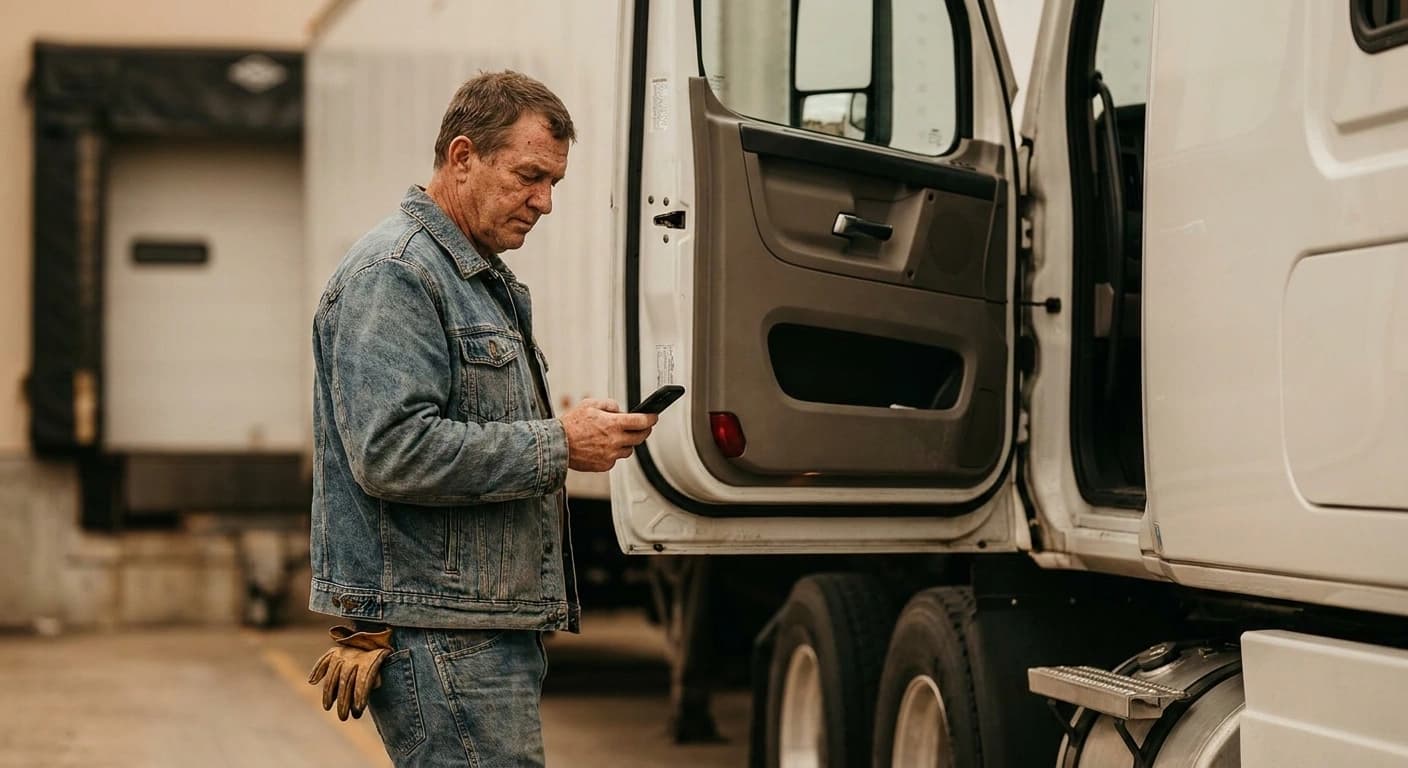
Pay and home time decide most of driver retention, and nothing in this post changes that. But tooling decides the daily friction, and friction is what turns a job somebody tolerates into a job somebody leaves. About 35 percent of newly hired drivers quit inside their first 90 days, which is exactly the window where a bad app makes its first and worst impression.
For a small fleet, in-cab technology is not an IT decision. It is a retention decision, and it is one of the few retention levers that does not add a cost per driver per week.
What does losing one driver cost a small fleet in 2026?
Industry estimates put the cost of replacing one driver at $8,000 to $20,000, with 2026 figures commonly pricing the average near $14,000 per turnover. That covers recruiting, orientation, onboarding time, and the productivity gap while the seat sits empty or a new hire gets up to speed.
The empty seat costs more right now than it has in years, because capacity is tight. C.H. Robinson's July 2026 truckload market update forecasts spot rates up roughly 34 percent year over year, near $2.33 per mile. DAT put national van spot linehaul at $2.49 per mile for the July 4, 2026 holiday week, up 7 cents week over week. Tender rejections hit 17.55 percent in June 2026, the highest since 2022.
Read that as pricing on your parked truck. In a soft market, a truck without a driver is an annoyance. In this market, it is freight you are handing to somebody else at good rates.
Scale matters too. Large truckload carriers are reporting annual turnover around 90 to 95 percent in 2026, and they have recruiting departments built to absorb it. A ten-truck fleet does not. Two turnovers in a quarter is 20 percent of your capacity and a five-figure hole, absorbed by an owner who is also dispatching.
Why do so many drivers quit in the first 90 days?
Because the job a driver quits is the one he experienced, not the one in the recruiting ad.
The first two weeks are when every gap between the phone call and the reality shows up. How the first assignment arrives. How long he sits at the first shipper. Whether anybody told him what the customer expects. What happens the first time paperwork goes sideways.
None of that is in the pay package he agreed to. All of it is what the job actually feels like on a Tuesday. And a new driver has no accumulated goodwill to spend on it. A five-year driver who hits a bad week has context and relationships. A week-two driver just has the bad week.
That is what makes the first 90 days a tooling problem as much as a management problem. In week one, your software is doing a lot of the talking.
Which digital frictions actually make drivers quit?
Not one of these ends a career on its own. They stack, and the stack is what he describes to the next recruiter who calls.
Being told the same thing three different ways. The load comes by phone call, then a text, then it shows up in an app, and the three do not agree on the appointment time. Now the driver is the one reconciling it, usually by calling the office and asking which version is real.
Re-entering information the office already has. Typing a customer address that lives in the system. Restating a pickup number that was on the rate confirmation. Every keystroke like that says the software was built for somebody else.
Paperwork that fails silently. A driver photographs a BOL at the dock in bad light. Nothing tells him it is unreadable. Three weeks later a broker disputes an invoice and now the office is calling him about a load he ran a month ago and cannot remember. He did the job right and still ends up in the wrong.
Apps built for the dispatcher and handed to the driver. A lot of driver-facing software is really a data-collection front end for the office's reporting. That intent shows. If the driver's screen exists to feed your dashboard, he can feel it.
The common thread is that each one makes the driver absorb a problem the system created. Do that enough times in week one and you have taught somebody that this outfit is disorganized, whether or not that is true.
What should a driver-facing app get right?
Three things, and they are less about features than about respect for his time.
One place the assignment lives. The load should land on his phone once, from the system of record, and be the only version. When a driver gets a push notification on assignment and the details are right there, the phone call becomes optional instead of mandatory.
One tap to mark the load, with the photo captured in the same motion. Pickup and delivery should each be a single action, and the photo should be part of it, not a separate errand he has to remember. Every extra screen between the dock and done is a screen somebody skips on a bad day.
Documents that stay attached to the load. When the BOL, the manifest photo, and the delivery photo live on the job, nobody calls the driver three weeks later asking him to find something.
Here is what Howdy Dispatch actually does today on the driver side, so you can hold the list against whatever you are running now. The driver gets a push notification on assignment. Pickup is one tap with a load photo. He can capture a manifest photo. Delivery is one tap with a delivery photo. GPS runs continuously to the HQ live map. He signs the truck off at the garage and it flips to parked. Per-load documents are accessible from the job.
One thing worth being straight about: automatic photo quality checking is on the roadmap, not live. The plan is to check load, manifest, and POD photos for blur at upload time while the driver is still at the dock and can reshoot. That is coming, not shipped, and you should evaluate us on what runs today.
We are also not an ELD, not a freight broker, and not a CDL or hours-of-service compliance product. If a vendor tells you their dispatch app solves your HOS compliance, ask harder questions.
How does better tooling show up in the office, not just the cab?
The retention argument is the point, but the office gets paid too.
Fewer check calls. When the office can see the truck on a live map and see that the pickup photo landed, the where-are-you call stops being necessary. Every one of those calls is an interruption for the dispatcher and a small insult to a driver who is doing his job.
The driver stops waiting on typing. With AI rate confirmation intake, a dispatcher uploads the broker's rate confirmation PDF and the load gets pre-filled: customer, origin, destination, mileage, rate, pickup and delivery times, broker contact. Five to ten minutes of retyping becomes about 20 seconds of review. That matters to the driver because the gap between load booked and driver knows is where he sits idle wondering if he is rolling today. If you want the detail on that, it is on our dispatch software with a driver app page.
Fewer arguments about what happened. When the timestamps and photos exist, the detention conversation, the damage conversation, and the late conversation all get shorter. The driver is not defending his memory against a broker's paperwork.
Where should a small fleet start?
Not with a platform migration. With the first week.
Count the places a driver has to look to know what he is hauling today. If the answer is more than one, that is your first fix, and it is usually a process fix before it is a software fix.
Ask your two newest drivers what annoyed them in week one. Not a survey. A five-minute conversation where you actually write it down. New hires still notice the friction that everyone else stopped seeing two years ago, and that window closes fast.
Fix exactly what they said. Not the roadmap version. The specific thing.
None of that requires buying anything. What it requires is treating the driver's daily experience as an operational metric instead of a soft one, which is the part most fleets skip.
The takeaway
The trucking industry has spent years treating retention as a compensation problem, and pay is genuinely most of it. But you cannot out-pay a job that is annoying every single day, and at a small fleet you probably cannot out-pay the carrier down the road anyway.
What you can do is make the job work. The dispatcher who does not have to call three times, the paperwork that does not come back a month later, the assignment that arrives once and is correct. That is not a perk. It is whether the job is well run, and drivers can tell the difference inside a week.
If you want to see what the driver side looks like on your own loads, start a 14-day free trial. If you run 5 to 100 trucks and would rather talk it through first, the founding-carrier program is at our contact page.
READ NEXT
AI Rate Confirmation Parser: Turn a Broker PDF Into a Booked Load
An AI rate confirmation parser turns a broker rate-con PDF into a pre-filled load in about 20 seconds, so a small fleet stops retyping every load.
Dispatch Automation ROI When Every Load Books in 15 Minutes
Dispatch automation ROI for small fleets in 2026: spot rates are up and the best loads go to whoever books fastest. Here is what the math looks like.