
Record Rates, Same Office: What a Small Fleet Should Automate First
Trucking dispatch automation for small fleets in a record-rate market. What to automate first to cover more loads and lift throughput without a second hire.
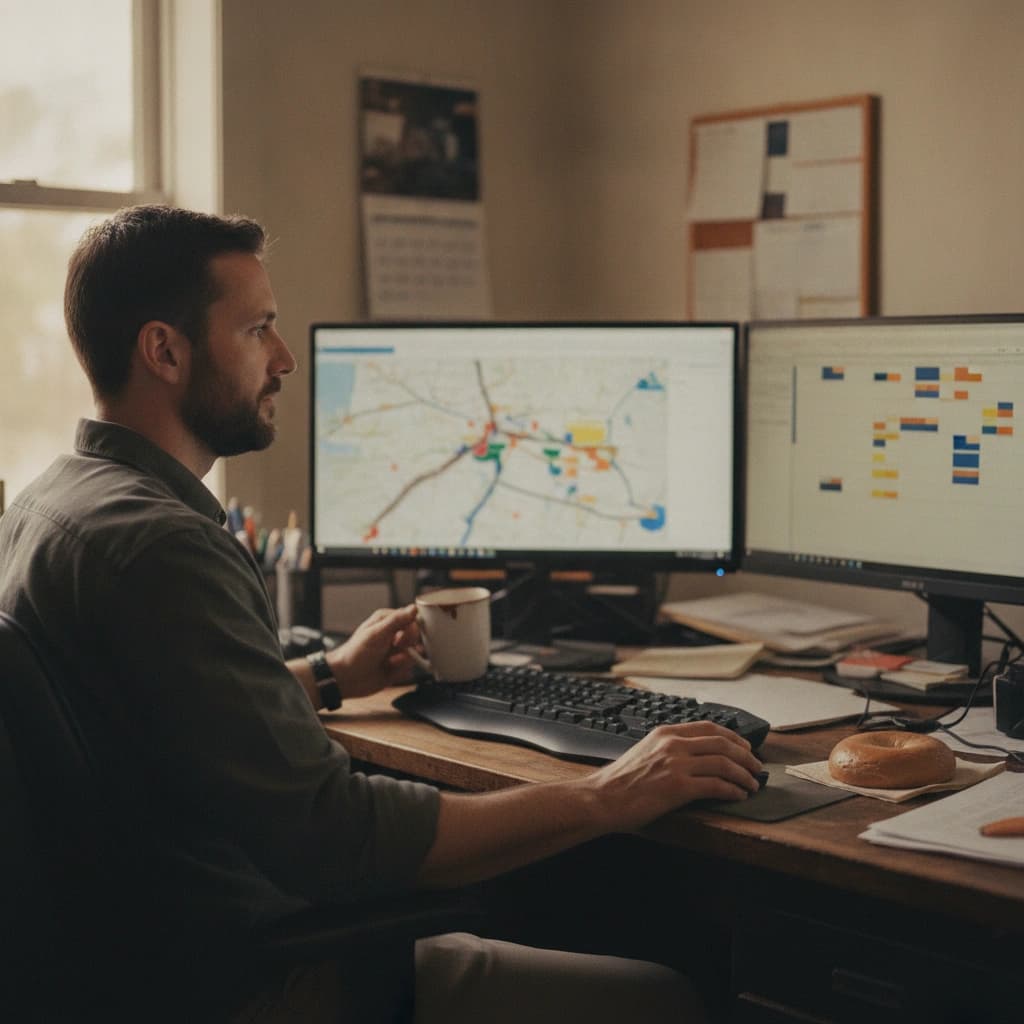
For the first time in a long time, the freight is not the problem. The office is.
Truckload spot rates hit a record high in early June 2026, around $3.83 per mile, and tender rejections have run near 17.5 percent, the kind of tight capacity that means loads are out there for carriers who can move on them, according to Truckinginfo freight coverage. A market like this rewards throughput. The carrier who can book and cover one more load a day, cleanly, captures upside that did not exist eighteen months ago.
But here is the catch most small fleets are running into right now. You can only book and cover as many loads as one dispatcher can physically type. When the constraint moves from the lane to the desk, the answer is not to chase more freight or hire a second dispatcher before the volume justifies it. The answer is to remove the manual data entry that caps how many loads a single person can run.
That is what trucking dispatch automation is actually for. Not autonomous dispatching, not a robot picking your loads. It is taking the typing, the chasing, and the paperwork failures off the dispatcher's plate so their judgment scales further. Below is the order I would automate them in, ranked by payback, for a small fleet trying to make the most of this market.
The bottleneck moved from the lane to the desk
Walk a small dispatch office on a busy week and you can see the cap. Loads are available. The dispatcher is on the phone, has three rate confirmations open, and is retyping broker details into the system between calls. Every load takes time at the desk before it ever moves down the road.
In this market, the number that decides your week is throughput per dispatcher. Not how many loads exist, but how many your office can turn around without dropping a ball. Tight capacity does not help you if your own admin is the thing slowing you down.
Stronger rates also do not automatically mean stronger cash flow. Fuel is high, and many brokers still pay on 30 to 45 day terms, so clean paperwork and fast turnarounds matter more, not less, per C.H. Robinson June 2026 market commentary. The fleets that win the next few months win on discipline and throughput, not just on the rate they booked.
So the question is simple. What do you automate first to lift that throughput without breaking what works?
Automate first: reading the rate confirmation
The single highest-payback automation is the one that happens dozens of times a day and is pure data entry: getting a broker rate confirmation into your system.
Today, that means a dispatcher opening a PDF and retyping the customer, origin, destination, mileage, rate, and pickup and delivery times into the dispatch board. Five to ten minutes a load, and it is most error-prone exactly when you need it least, late at night, between calls, on the fifth load of a long day. One transposed appointment time and a driver shows up to a closed dock.
This is where Howdy's AI rate-confirmation intake does the work. The dispatcher uploads the broker rate-con PDF, and the system reads it and pre-fills the load: customer, origin, destination, mileage, rate, pickup and delivery datetimes, and the broker contact pulled from the header, footer, and dispatch section. It auto-matches the customer, driver, and truck against your address book and runs address validation on both ends. Five to ten minutes of typing becomes about twenty seconds of review.
Note the word review. This is live today, and the dispatcher still confirms every load before it goes out. The AI removes the keystrokes, not the judgment. You are reading what it pulled and saving it, not handing over the decision.
Automate second: getting documents off the driver's phone
The second automation protects your money weeks after the load delivers.
The paperwork that gets an invoice paid, the signed bill of lading, the manifest, the proof of delivery, too often lives as a blurry photo buried in a driver's camera roll. When a slow-paying broker disputes an invoice three weeks later, the dispatcher is texting the driver asking if they still have the picture from a load they barely remember.
The fix is one-tap document capture on the driver app, filed automatically per load. Driver taps pickup and shoots the load photo. Captures the manifest. Taps delivery and shoots the POD. Each image lands on the job in your HQ document gallery, attached to the right load, available the moment you need it for billing or a dispute. No camera roll archaeology.
There is a quality layer coming next for this, automatic photo checks that catch a blurry or unreadable document while the driver is still at the dock and can reshoot. That one is shipping next, not live yet, so I will not pretend it is in your hands today. But the per-load capture itself is live, and it is the difference between paperwork you can find and paperwork you hope still exists.
Automate third: knowing where the truck is without calling
The third automation gives the dispatcher back the time the first two saved.
Most small carriers still answer the question "where is my truck" by calling the driver. Every two hours, a check-in call that interrupts the driver and ties up the dispatcher. In a market where the dispatcher should be booking the next load, that is throughput bleeding out one phone call at a time.
Continuous GPS on the HQ live map replaces the check-in call. The dispatcher glances at the map, sees the truck moving down its lane, and knows the load is on schedule without dialing anyone. The driver stays focused on driving. The dispatcher stays focused on covering the next load. The time you reclaimed from rate-con typing now goes to revenue work instead of status calls.
There is a second benefit that shows up when a broker calls asking for an update. Instead of putting them on hold to chase the driver, the dispatcher reads the position straight off the map and answers in the moment. In a tight market, the broker who gets a fast, confident answer is the one who calls you first with the next load. Visibility is not just an internal convenience. It is part of how a small carrier earns repeat freight.
The ROI math for a small fleet
Put it together with a plausible example. Take a 12-truck dry van fleet running one dispatcher.
Say that dispatcher books eight to ten loads a day. At five to ten minutes of rate-con entry per load, that is roughly an hour of pure typing, before you count the status calls and the paperwork chasing. Industry roundups put total manual dispatch coordination around two to three hours a day, which is directional, not a Howdy number, but it matches what a busy desk feels like.
Claw back even half of that and the math is not abstract. An hour a day of reclaimed dispatcher time is an hour spent covering loads instead of typing them. In a record-rate market, that hour can be the difference between leaving freight on the table and booking the run that pays for the month. You captured the upside without adding office headcount, and you did it without asking your dispatcher to work later than they already do.
What automation does not do
Be clear-eyed about the limits, because the hype gets this wrong.
Automation does not pick your loads. It does not negotiate your rate. It does not dispatch autonomously while you sleep. The dispatcher keeps every bit of judgment about which load to take, which driver to run it, and what a fair rate is. The software removes the typing and the chasing that were slowing that judgment down.
And to restate what Howdy Dispatch is not, since this topic borders on operations and compliance: it is not an ELD, not a freight broker, and not a carrier of record. It is the dispatch platform that takes the manual work off your desk so a small team can run like a bigger one.
If you want to put that throughput to work this quarter, start a 14-day free trial, or ask about the founding-carrier program through our contact page. The best freight market in years rewards the office that can keep up with it.
READ NEXT
Lumper Receipt Tracking: Stop Losing Money at the Dock
Lumper fees run $150 to $400 a stop and are reimbursable with a receipt. Here is how a small fleet stops losing that money on every load.
Dispatch Software With a Driver App: Why You Need Both Sides
Most trucking dispatch software is an HQ dashboard drivers ignore, or a driver app with no HQ side. Why a small fleet needs both in one platform.