

Drivers Won't Open a Dashboard: What a Trucking Driver App Has to Get Right
Most trucking software dies because drivers ignore the app. Here is what a driver app has to get right, and the one-tap load flow Howdy Dispatch ships today.
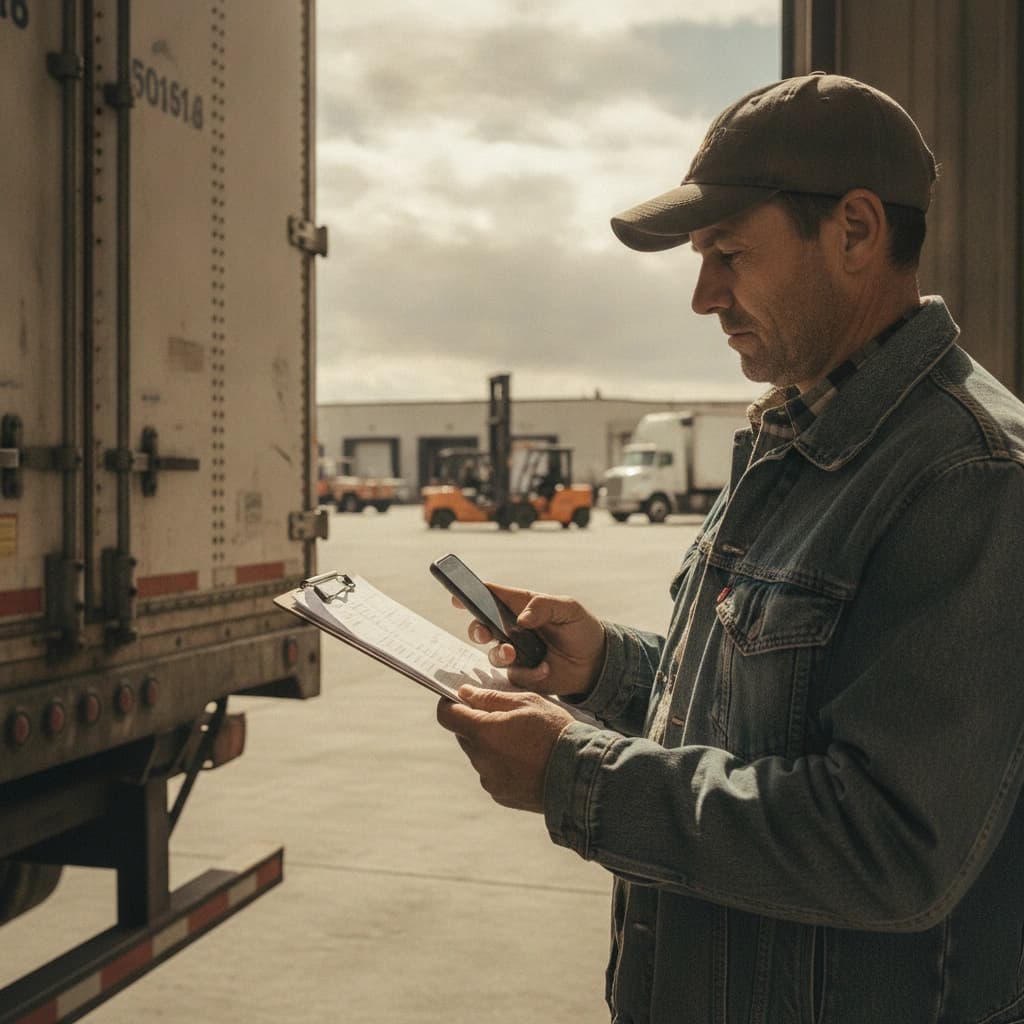
Most dispatch software fails for one reason, and it has nothing to do with the dispatcher. It is that the driver never opens the app.
A dashboard the driver ignores produces no photos, no live location, and no proof of delivery. The dispatcher bought the tool, the office is excited about it, and three weeks later the driver is still texting a blurry bill of lading from a personal phone, or not sending one at all. Every benefit you were promised lives downstream of one thing: does the person at the dock actually use it.
This post is about the driver side, which most trucking software treats as an afterthought. We will name what a driver app has to get right, walk the one-tap load flow that small fleets are running today, and be honest about what is shipping next versus what is live.
Why most trucking software fails at the dock
Picture the moment. A driver pulls into a shipper, has been awake since 4 a.m., and is being waved toward a door. The last thing that driver wants is to stand in the cab tapping through a form.
If your software asks a tired driver to type, it loses. Not because the driver is lazy, but because the path of least resistance is the camera roll and a text message. So that is what happens. The BOL goes into 4,000 photos of grandkids and gas receipts. The GPS never turns on because nobody opened the app. And six months later, when a broker disputes a load, nobody can prove the delivery happened the way it did.
That is the real cost. The data you need to protect an invoice and a relationship is exactly the data that does not get captured, because the tool was built for the office and not the dock.
And the dispatcher pays for it twice. First in the moment, chasing a driver by phone for a location update or a photo that should have come automatically. Then later, when an undocumented detention claim gets denied or a delivery that nobody photographed turns into a he-said-she-said with a broker. Software that the driver skips does not just fail to help. It quietly creates the exact gaps it was supposed to close, while the office assumes everything is being captured.
What a driver app has to get right
After watching how drivers actually behave with software, the requirements come down to a short, unglamorous list.
- One-tap actions, not forms. Every step a driver takes should be a single tap or a single photo. The moment it becomes data entry, adoption drops.
- Photos, not typing. A camera is something a driver already uses a hundred times a day. Lean on it. The app should ask for a picture, not a paragraph.
- A push that says what to do next. The driver should not have to remember to open anything. The app tells them a load is assigned and what the next action is.
- A payback the driver can feel. This is the one most software forgets. The app has to make the driver's day easier, fewer "where are you" calls, less arguing about paperwork later, or it will not get used no matter how slick the dispatcher dashboard is.
That is the whole design philosophy: ask for almost nothing, and pay the driver back in fewer interruptions.
The one-tap load flow Howdy Dispatch ships today
Howdy Dispatch is dispatch software with a driver app, built on both sides. The HQ side is for the dispatcher. The driver side is a real iOS app, and here is the flow it runs today, described at the level of what it does for you rather than a step-by-step a competitor could copy.
The second a dispatcher assigns a load, say a dry-van run from a broker like a regional 3PL, Atlanta to Memphis at a set rate, the driver gets a push notification on the phone. No phone call, no "did you see the email." The load is just there.
From that point the driver flow is built around taps and the camera:
- One tap to start pickup, with a load photo. The driver confirms they are rolling and captures the load. That photo is now attached to the job, not buried in a personal camera roll.
- One tap for the manifest photo. The paperwork is captured at the dock, while the driver is standing in front of it, which is the only time it is easy to get right.
- Continuous GPS on the HQ live map. While the truck is moving, the dispatcher can see it on a live map without texting. That alone kills most of the "where are you" calls.
- One tap to mark delivery, with a delivery photo. Proof of delivery is captured at the moment it matters, tied to the load.
- Garage sign-off. When the driver is done, a sign-off flips the truck to parked, so HQ knows the asset is available again.
Every one of those photos is stored per load and visible to HQ on the job detail page. Nothing depends on a driver remembering to forward anything. The documentation just exists, attached to the right load, the first time. That is what we mean when we call the driver app a documentation accelerant. The driver does less, not more: tap, shoot, drive.
Look at where the dispatcher ends up on the other side of that flow. Instead of a folder of texts to reconcile against a spreadsheet, they have a job detail page with the pickup photo, the manifest, the route the truck actually took, and the delivery photo, all in one place and all time-stamped. The work of assembling proof, the part that usually happens under deadline pressure when a dispute lands, is already done. That is the difference between a tool that adds a step for the driver and a tool that removes steps for both sides.
Why this matters more in a tight 2026 freight market
The timing is not incidental. The freight market in 2026 is unforgiving in two directions at once.
Truckload spot rates hit a record in early June 2026, around $3.83 per mile, and are expected to run 20 to 25 percent above prior-year levels through the year, according to freight-market reporting from C.H. Robinson and industry coverage. At the same time, FMCSA enforcement has pulled tens of thousands of non-compliant drivers and carriers out of service in 2026, tightening capacity further.
Put those together and the lesson for a small fleet is blunt. The loads you do run are worth more, and there are fewer carriers chasing them, so you cannot afford to lose money on the back end to a disputed invoice or an unprovable delivery. A clean, photographed, time-stamped record per load is not paperwork hygiene. It is how you protect the rate you fought to book.
Here is a takeaway you can use this week even without any software: standardize exactly which photos every driver takes at pickup and at delivery, and make it the same two or three shots every time. Consistency at the dock is worth more than any feature, and it is the habit the right app simply enforces for you.
What is coming next on the driver side
We are careful about the line between what ships today and what is on the way, so here is the honest version.
The flow above is live. The next thing rolling out on the driver side is AI photo quality QA: every load, manifest, and delivery photo gets checked for blur and legibility at the dock, while the driver is still standing there and can reshoot. The goal is to catch an unreadable BOL before a broker disputes the invoice three weeks later, not after. That capability is shipping next, not something you can rely on today, and we will say so plainly until it is in your hands.
What Howdy Dispatch is and is not
One more thing, because the trucking software space is full of overclaiming.
Howdy Dispatch is dispatch software with a real driver app. It is not an ELD. It is not a freight broker or a carrier of record. It is not a CDL or hours-of-service compliance product, and it does not do route optimization or autonomous dispatching. The dispatcher and the driver keep the judgment. What the platform does is make the work between them captured, visible, and provable, so a small fleet runs cleaner with less chasing.
If that is the gap on your operation, the driver side is where most software quietly falls apart, and it is where we started. Try it on your own fleet with a 14-day free trial, or talk to us about the founding-carrier program at howdydispatch.com/contact.
READ NEXT
Q4 Peak Season 2026: A Small Carrier's Dispatch Plan
Q4 peak season for a small carrier in 2026: trucks are short, ratios are up, and diesel peaked at $6.53. What a 5 to 20 truck fleet changes in dispatch now.
Driver GPS Tracking Off Duty: Where the Map Should Go Dark
Driver GPS tracking off duty costs a small fleet trust and clean data. A shift clock that turns the map off at clock-out keeps both. Here is how to set it up.