
The Dashboard Your Drivers Never Open: Why Dispatch Software Needs a Driver App
Most trucking software is an office dashboard your drivers never open. Here is why a small fleet needs dispatch software with a real driver app, on both sides.
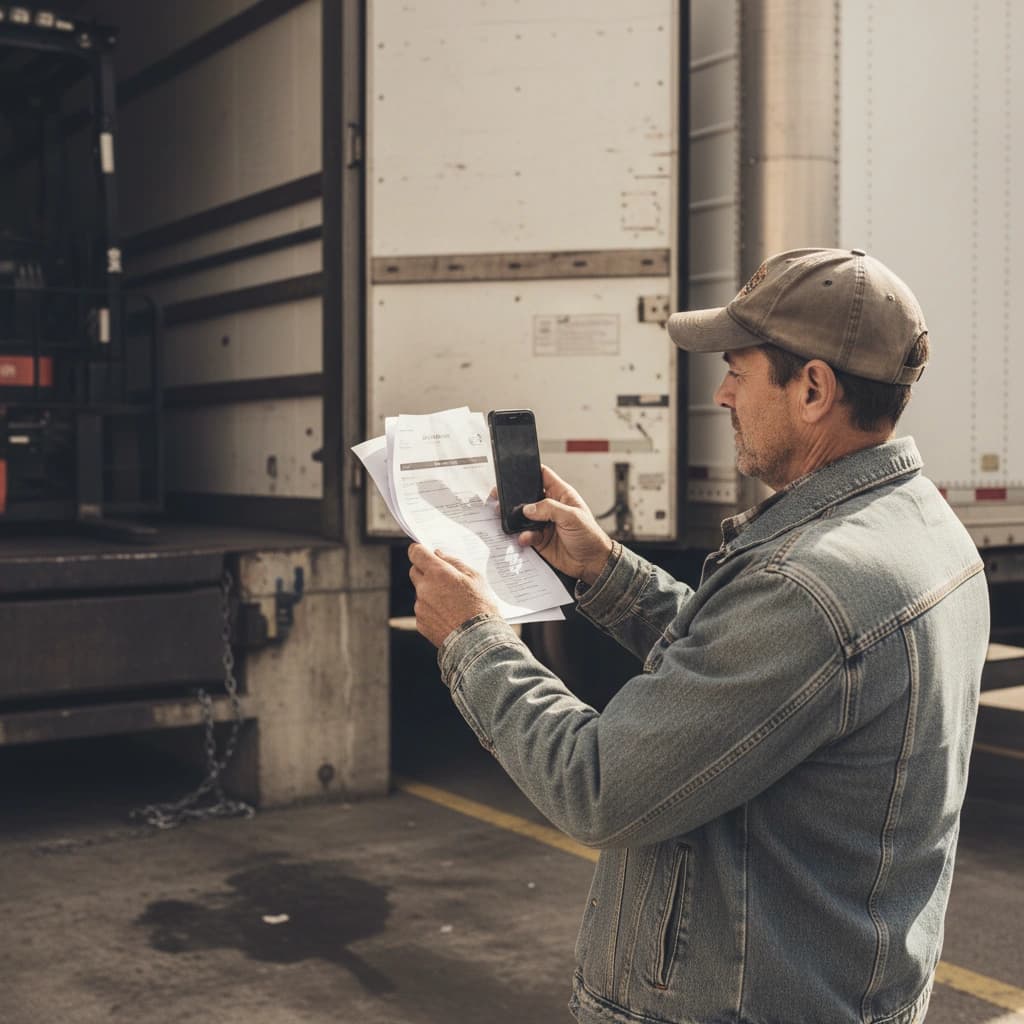
You sat through the demo and the dashboard looked great. Loads on a board, a map with little truck icons, reports you could actually read. You signed up, spent a weekend setting it up, and then watched the whole thing die at the dock. Your drivers opened the app once, found it slow or confusing, and went right back to texting you photos. Now you are paying for software the office uses and the road ignores, which means you are still running the fleet on group texts.
This is the most common way trucking software fails a small carrier. Not because the office side is bad. Because the driver side was an afterthought, a thin portal bolted onto a dispatcher tool, and drivers can smell that in about thirty seconds. A one-sided platform does not remove the chaos. It just moves it somewhere you are still paying for.
For a fleet running 5 to 50 trucks, the gap between headquarters and the cab is where the money leaks. That gap is the whole problem worth solving, and it is the reason dispatch software only works when the driver app is a real product, not a tacked-on web page.
Where the HQ-to-cab gap actually costs you
Think about the documents that run your business and where they currently live.
A driver picks up at a shipper and snaps a bill of lading. It goes into the camera roll on his personal phone, somewhere between a photo of his lunch and a screenshot of a Facebook meme. Three weeks later the broker disputes the invoice and wants proof. Now you are texting the driver, who is two states away on another load, asking him to scroll back through a thousand photos to find one blurry BOL. Sometimes he finds it. Sometimes he does not, and you eat the difference.
Or take visibility. A broker calls asking where the truck is. You do not know, so you call the driver, who does not pick up because he is fueling. You call back in twenty minutes. Multiply that by every load on the board and the dispatcher's whole day becomes a phone tree. You are not dispatching, you are dialing.
Then there is proof of delivery. The load delivered fine, the driver texted you a photo, and six months later your insurance carrier asks for documentation on a claim. That photo is in a deleted text thread on a phone the driver traded in. The work happened. The paper to prove it is gone.
None of these are exotic edge cases. They are the daily texture of running a small fleet, and every one of them traces back to the same root cause: the information lives on the driver's side and never makes it cleanly to the office, because there is no real product connecting the two.
Why 2026 makes this the year to fix it
The freight market is not handing anyone an easy year. The 2026 outlook reads as a slow, uneven recovery rather than a boom. Analysts are forecasting roughly 2 to 6 percent spot-rate growth, and they are clear that the lift is coming from carriers exiting and capacity tightening, not from a surge in demand (CCJ 2026 Freight Market Outlook). ACT Research has called 2026 a foundational year, the kind you build through, not the kind you ride.
Carriers are reading the room the same way. Survey reporting found that 68 percent of carriers do not plan to buy additional equipment in the first half of 2026 (Trucking Info). Wallets are closed. Nobody is growing by adding trucks this year.
That changes where the growth lever actually is. When you cannot grow by buying more trucks, you grow by tightening the trucks you already run. Fewer disputed invoices. Fewer hours lost chasing paperwork and drivers. Faster billing because the documents are where they should be. Software that closes the HQ-to-cab gap is one of the cheapest levers a carrier has in a year like this, and it does not require a single new piece of equipment.
What a real two-sided platform looks like
Both sides have to be a finished product, not one polished side and one neglected one. Here is what that means in practice.
On the HQ side, the dispatcher gets a live GPS map so truck location is something you glance at, not something you call about. Every load carries its own document archive, so the BOL, the manifest, and the proof of delivery live with the load, not in someone's camera roll. And the part that saves the most office time: AI parses your broker rate confirmations and pre-fills the load. You attach the rate-con PDF, and instead of retyping the customer, the origin and destination, the mileage, the rate, and the pickup and delivery windows, you review what the AI pulled and save it. Five to ten minutes of data entry becomes about twenty seconds of review.
On the driver side, the app has to be something a driver will actually use without training, because drivers do not attend onboarding. So it is built around one tap. One tap to confirm pickup with a load photo. One tap to capture the manifest. One tap to mark delivery with a delivery photo. A push notification when a load gets assigned, so nobody is wondering what is next. A one-tap garage sign-off at the end of the day that flips the truck to parked. That is the whole driver workflow, and that simplicity is the point.
The reason both sides have to come from the same vendor is what happens between them. When a driver taps delivered and snaps the photo, the load updates itself on the dispatcher's screen and the photo files itself under that load, forever. No phone call. No screenshot forwarded into a chat thread. The load tells its own story as it moves, instead of becoming three phone calls and a paperwork hunt later. That is what people mean when they look for dispatch software with a driver app, and it is the bet behind building both sides well.
A quick note on honesty, because this category is full of vague claims. Driver-side AI that checks every photo for blur and legibility at the dock is on our roadmap and shipping next, not something to claim as live today. The live AI is the rate-confirmation parsing on the HQ side. We would rather tell you exactly what works now than wave at a feature list.
What to look for, and what to ignore
If you are evaluating tools this year, a few questions cut through the demo gloss fast.
Ask to see the driver app, not just the dashboard. Any vendor can make an office dashboard look good on a projector. Make them put the driver app on a phone and walk you through a pickup. If it takes more than a tap or two, your drivers will not use it, full stop.
Confirm that paperwork is stored per load, forever, not in a chat thread or a shared drive someone has to maintain. The whole value is being able to pull a clean BOL or POD months later when a broker or an insurer asks. If the answer involves anyone manually filing anything, the leak is still there.
Watch for overkill. Enterprise TMS platforms are built for mega-fleets and priced like it, often $30,000 to $60,000 a year, stuffed with features a 10-truck operation will never touch and a driver experience drivers ignore anyway. Small-fleet software typically runs from tens to a few hundred dollars a month. Paying enterprise prices for features you will never use is its own kind of waste. You need both sides done well, not the longest feature list.
And be clear about what the tool is not. A dispatch platform with a driver app is not an ELD, so it does not replace your hours-of-service device. It is not a freight broker or a carrier of record. It is not a route optimizer, and it does not autonomously dispatch or accept loads. The dispatcher still decides, the driver still drives, and the judgment stays with the people who have always had it. The software just makes sure the load, the location, and the paperwork stop falling through the gap between them.
That gap is where a small fleet quietly loses time and money every week. Closing it does not take a new truck or a five-figure contract. It takes a platform that treats the driver side as seriously as the office side. If you want to see what that looks like on both ends, Howdy Dispatch runs a 14-day free trial, and you can put the driver app on a phone before you commit to anything. Howdy. Let's haul.
READ NEXT
Lumper Receipt Tracking: Stop Losing Money at the Dock
Lumper fees run $150 to $400 a stop and are reimbursable with a receipt. Here is how a small fleet stops losing that money on every load.
Driver Incident Reporting App: The First Hour Decides
A driver incident reporting app captures the accident, breakdown, or DOT stop while the driver is still there. Why the first hour decides the paperwork.