

Why Your Drivers Won't Use the App (and How a Small Fleet Actually Gets Adoption)
Most trucking driver apps die from non-adoption, not features. Here is why small-fleet drivers ignore apps, and the checklist to get them actually using one.
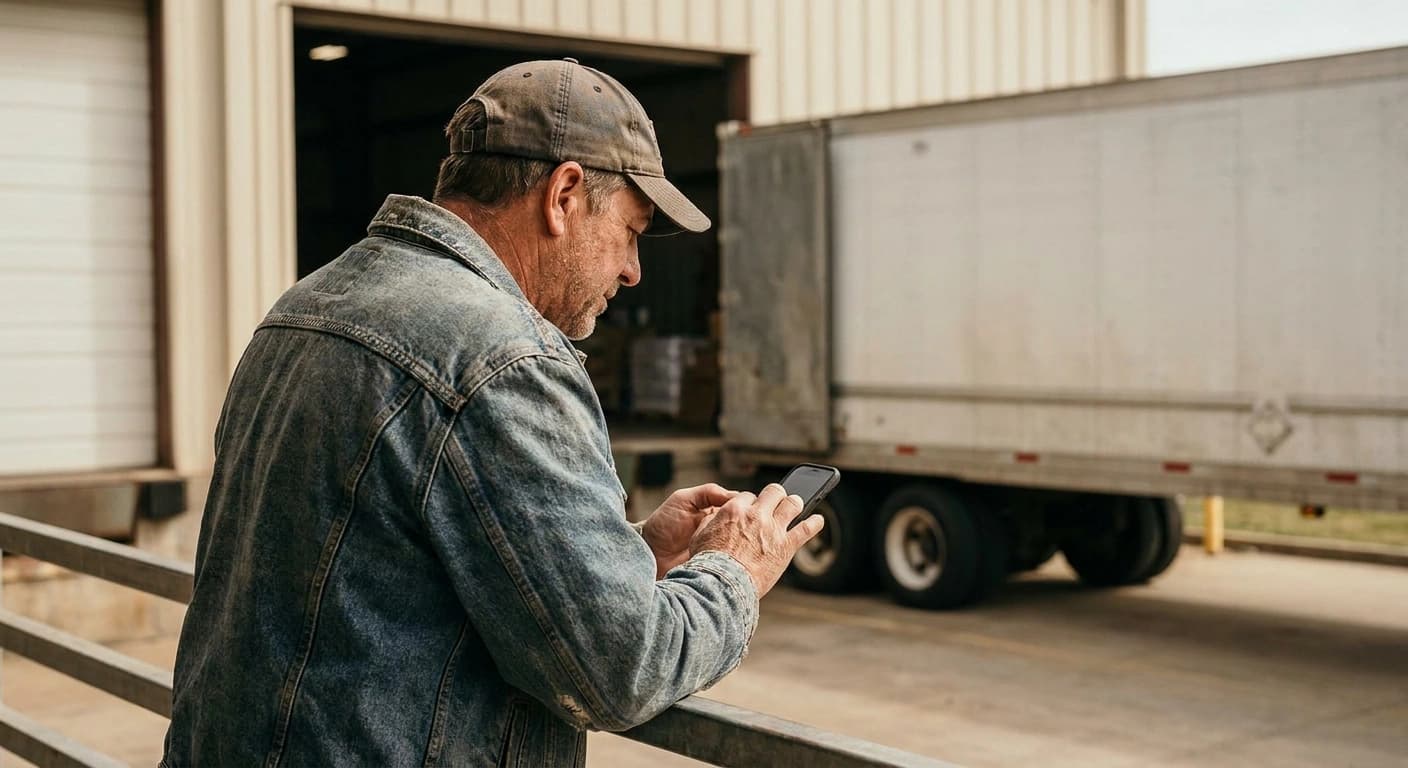
Every dispatch platform lives or dies on one thing the sales demo never shows you: whether your drivers actually open the app on day 30.
The demo shows you a clean HQ dashboard, a live map, tidy load cards. What it cannot show you is the part that decides whether any of it pays off, your drivers, at a dock in the rain, choosing whether to tap the app or just text you a photo like they always have. Get that wrong and you have not bought software. You have bought a second broken system to run alongside the first one.
The app nobody opens is the most expensive one you can buy
Picture the rollout. You sign up, you set up loads, you tell the drivers to download the app. Two weeks later half of them are still texting POD photos to your cell phone. Now you are checking the app and your texts and a group chat, reconciling three sources for the same load. You did not remove work. You added a system on top of the old habits and kept every one of them.
That is the trap of driver-facing software for a small fleet. The feature list is not what decides the outcome. Adoption is. An app with ten great features that your drivers refuse to open is worth less than a phone call, because at least the phone call happens. For a dispatcher or owner running 1 to 50 trucks, the question to ask a vendor is never "what can it do." It is "will my drivers actually use it, and what happens on the days they don't."
Why small-fleet drivers ignore most apps
Drivers are not anti-technology. Most of them run a smartphone all day. They ignore trucking apps for concrete, fixable reasons.
Too many taps. A form built for the office is misery in the cab. If logging a delivery takes six screens and three dropdowns, a driver with a dock worker waiting on him will skip it and text you instead. Every extra step is a vote against the app.
Built for the office, not the cab. A lot of driver apps are really data-entry tools wearing a driver costume. They exist to feed the HQ dashboard, and the driver can feel it. There is no payoff on his side, just homework that benefits someone else.
Consumer-app expectations. Your drivers use apps that are instant, obvious, and one-handed. They expect the same at the dock. A trucking app that feels clunky next to the apps in their pocket loses by comparison every single time.
The trust gap. If an app reads like surveillance, a live dot following them, constant pings, a scoreboard, it gets left closed on principle. A tool that feels like it is watching them will not get used, no matter how good the mapping is.
None of these are technology problems. They are design and expectation problems, which means they are fixable, and which means a vendor that shrugs and blames the drivers is telling you they have not solved them. The fleets that get adoption did not find more cooperative drivers. They picked or built a tool that gave the driver a reason to open it and then got out of his way.
The 2026 stakes: adoption now touches retention
There has always been a productivity argument for driver adoption. In 2026 there is a retention argument too, and it is sharper.
Turnover at large truckload carriers still runs around 90 percent annually this year. Smaller carriers do somewhat better, in the 60 to 75 percent range, but that is still most of your roster potentially turning over inside a year. It gets worse at the front: 2026 reporting shows about 35 percent of newly hired drivers quit within 90 days, and 55 percent leave within 6 months.
Here is the newer finding. A 2026 report found that more than half of surveyed drivers say in-cab technology influences their decision to stay with a fleet. Read that next to the turnover numbers and the math is unforgiving. If a driver's daily experience of your tools is friction, that friction is now a retention cost, not just a productivity one. A 50-truck fleet that is already replacing a large share of its drivers every year cannot afford software that makes the job more annoying. NATSA's 2026 outlook expects small fleets to keep increasing adoption of TMS, telematics, and dispatch tools where scheduling and freight uncertainty run high, which means the tool is coming either way. The only question is whether it helps or hurts.
What makes a driver actually use the app
Adoption is not a mystery. Drivers use the tools that make their day easier and ignore the ones that do not. A few things reliably separate the two.
One-tap actions that replace a phone call. The app has to remove a step, not add one. If marking a pickup, capturing a manifest, or sending a delivery photo is a single tap, the app becomes the fast path. The moment it is slower than texting you, you have lost.
It saves the driver time, not just the office data. The test is simple. Does the driver's day get easier on day one. A driver at a dock in Laredo who can snap a one-tap POD and know it landed, instead of texting a photo into a thread where it gets lost, will use that every load. The office gets clean data as a byproduct, but the driver got the benefit first. That order matters.
It respects the driver. Give him the load, the stops, and the taps he needs, and skip the theater that reads like monitoring. Drivers adopt tools that treat them as the professional running the truck.
Why a two-sided platform gets adoption a bolt-on app never will
Here is the structural reason most driver apps fail, and it is not about the app at all.
Most AI-for-trucking tools are HQ dashboards. They are built for the dispatcher, and a driver app is bolted on afterward as a data-collection endpoint. When the two sides are separate systems stitched together, the driver app is always extra work, because it is not how the driver gets his job. It is a chore layered on top of however he already finds out where to go.
When the dispatcher and the driver run the same system, that flips. The app is not homework, it is how the driver receives the load. He opens it because that is where the work is.
That is how Howdy Dispatch is built, on both sides. HQ gets the live map and dispatch flow. The driver gets a real iOS app: a push notification the moment a load is assigned, one-tap pickup with a load photo, manifest capture, and delivery photos, all one-handed at the dock. AI photo QA, which checks each photo for blur while the driver is still standing there to reshoot, is rolling out next. When it lands it will catch the unusable POD before it costs you a rejected invoice, but today the shipped driver features are the one-tap capture flow and the live tracking that comes with it.
One thing to be clear about, because it is where dispatch software gets oversold. Howdy is not an ELD, not a freight broker, and not a compliance product. It does not run hours of service for you and it does not optimize your routes. The dispatcher still runs the load. Howdy is the two-sided platform that makes the load easy to run on both ends, which is exactly what gets a driver to keep the app open.
A simple adoption checklist for your next rollout
Whatever tool you choose, run the rollout like adoption is the goal, because it is.
- Move one workflow first. Pick a single painful step, usually POD photos, and move only that. Do not ask drivers to change ten habits at once.
- Make the driver's day easier on day one. If the first thing they do in the app saves them a phone call, you have earned the second thing.
- Measure opens, not installs. Everyone installs it when you tell them to. Adoption is who is still opening it in week four. That is the only number that predicts whether the tool pays off.
An app your drivers actually use is a retention tool now, not just a dispatch tool. If you want to see what two-sided looks like, Howdy Dispatch runs a 14-day free trial, no payment method required.
READ NEXT
Drivers Won't Open a Dashboard: What a Trucking Driver App Has to Get Right
Most trucking software dies because drivers ignore the app. Here is what a driver app has to get right, and the one-tap load flow Howdy Dispatch ships today.
The Blurry BOL Photo Problem: Fix It at the Dock
The blurry BOL photo problem costs a small fleet the whole invoice, weeks later. How to catch a bad bill of lading photo at the dock, not in the office.