

The Broker Asked Where Your Truck Is. The Fleets That Answer in Ten Seconds Get the Next Load.
Brokers now expect real-time location and ETA, not a callback. Here is how a small fleet answers where is my truck in seconds and earns repeat loads.
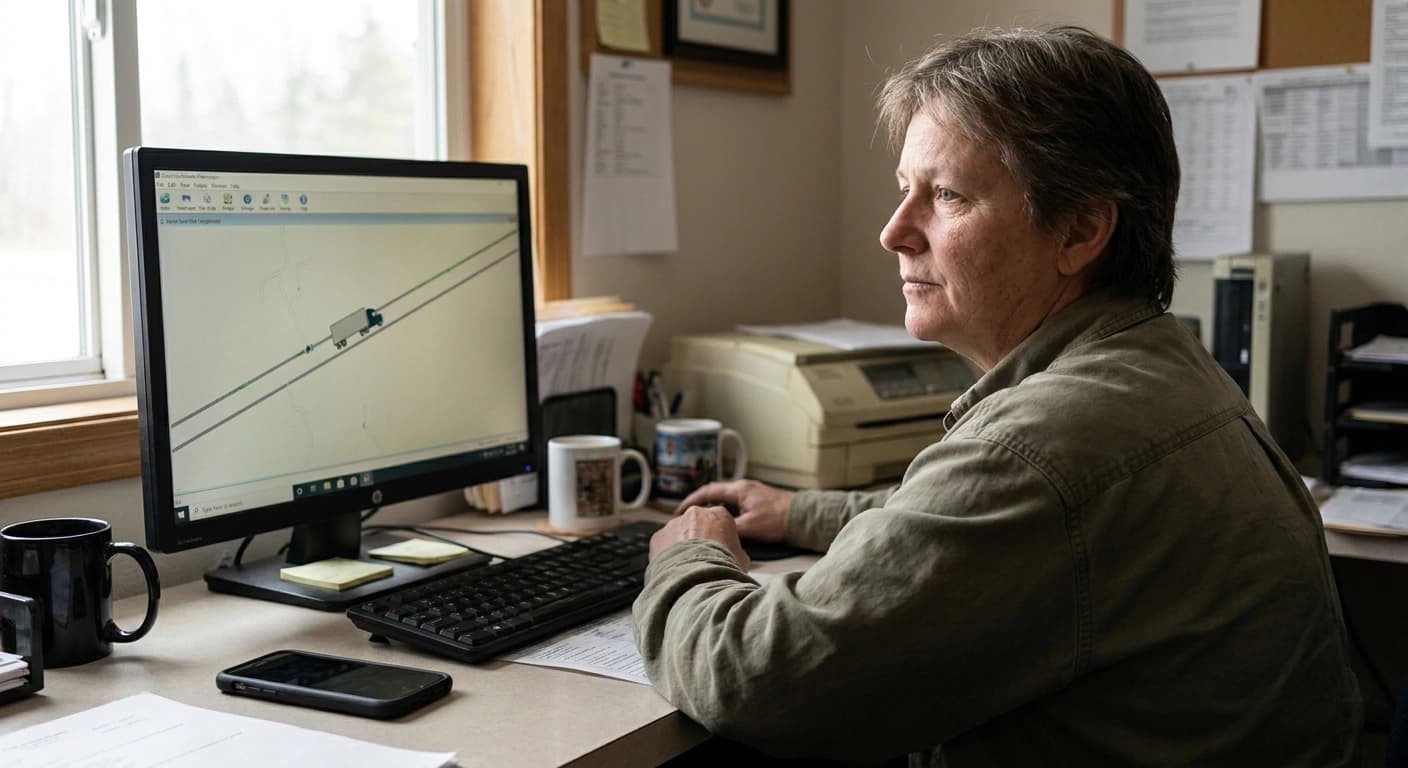
It is 2 p.m. and the broker who gave you the Dallas to Memphis load texts the dispatcher: "ETA on that truck?" What happens in the next ten seconds is worth more than the load itself, because it quietly decides whether that broker calls you first next week or scrolls past you to the carrier who answers faster.
That question, "where is my truck," looks like a status update. It is really a re-book question. And in 2026 the small fleets winning repeat freight are the ones who can answer it from a screen, in seconds, without picking up the phone and interrupting a driver at 70 miles an hour.
Why "where is my truck" is really a re-book question
Brokers have changed how they operate. Freight-software coverage in 2026 describes brokers leaning hard on native visibility integrations that push location pings and ETA updates automatically, specifically so a rep does not have to call the carrier for a status. Truckstop's 2026 broker software guide is blunt about the tradeoff: without tracking, the broker has to call the carrier for status, and that time comes straight out of their sourcing and booking hours.
Read that from the carrier's seat. Every time a broker has to chase your truck by phone, you are costing them the one thing they cannot make more of during a shift, which is time. ATS makes the same point about how the best brokers track shipments: real-time visibility is table stakes now, and a carrier who provides it is easier to re-book than one a rep has to babysit.
So when a broker texts for an ETA, they are not just asking about this load. They are running a small test. Fast, accurate answer, and you look like a professional carrier worth another lane. Slow answer, or "let me call my driver and get back to you," and you have just taught them that using you is more work.
The old way: the dispatcher becomes a human tracking system
Here is how most small fleets answer that broker today. The dispatcher texts the driver. The driver, who is driving, does not answer for twenty minutes. The dispatcher calls. The driver picks up, guesses an ETA off the top of his head, and gets back on the road annoyed. The dispatcher relays a number to the broker that is really just a hopeful estimate.
Now multiply that by every active load and every broker who wants a check-in. The dispatcher spends the afternoon as a human tracking system, relaying positions between drivers and brokers, and never gets to the thing that actually grows the business, which is booking the next load.
It is worse than just slow. The driver gets interrupted for status all day. The ETA is a guess, so when the truck shows up late, the broker remembers. And nobody has a clean record of when the truck actually arrived, which comes back to bite you the first time there is a detention or a late-delivery dispute.
What live visibility looks like for a small fleet
The fix is not a bigger phone plan. It is answering the broker from a map instead of from a phone call.
Howdy Dispatch shows live truck location on the HQ map, so the dispatcher can see where every truck is without calling anyone. When the broker texts for an ETA, the dispatcher looks at the screen, sees the truck is 40 miles out on I-40, and gives a straight answer in seconds.
On the driver side, the Howdy iOS app turns real load events into real status. One-tap pickup with a load photo, manifest capture, and one-tap delivery mean "at pickup" and "delivered" are facts with a timestamp, not another phone call. The dispatcher is not guessing whether the driver made the dock. It is on the board.
Be clear about the line here, because it matters. The dispatcher still gives the ETA. Howdy shows you where the truck is and when each stop actually happened, and a human reads that and tells the broker "looks like a 4:30 delivery." Howdy is not an ELD, it does not autonomously predict arrival, and it does not decide anything for you. It removes the phone tag. The judgment stays with the dispatcher, which is exactly where it belongs. If you want the fuller picture of how the HQ map and the driver app work together, this is the dispatch software with a driver app side of the platform.
A ten-second answer, in practice
Picture the same Dallas to Memphis load, run the new way. The broker texts at 2 p.m. asking for an ETA. The dispatcher glances at the HQ map, sees the truck sitting at 40 miles out with a "picked up 9:14 a.m." timestamp already on the load, and texts back: "On I-40 about 40 out, looking like 4:15 to 4:30." Total elapsed time, under fifteen seconds. No call to the driver, who is heading down the interstate and never knows the exchange happened.
Compare that to the version where the dispatcher texts the driver, waits, calls, interrupts him, gets a rough guess, and relays a soft "maybe 5-ish" back to the broker twenty-five minutes later. Same truck, same lane, same load. One version reads as a carrier that has its act together. The other reads as a carrier the broker has to manage.
Now stack that up over a week. A dispatcher fielding six or eight check-ins a day, each one handled from the map in seconds instead of a phone relay that eats half an hour, gets most of an afternoon back. That afternoon is where the next loads get booked. Visibility does not just make you look good to one broker, it gives your dispatcher the time to actually grow the board.
The professionalism dividend
There is a payoff to this that goes past any single load. A small carrier that answers fast and accurately looks bigger and more reliable than it actually is. When a broker can text a five-truck fleet and get the same instant, confident status they would get from a hundred-truck carrier, that fleet stops feeling small to them. That is how a little operation earns better lanes and steadier freight, by being the easy carrier to work with.
And the record you build along the way protects you. Timestamps of when the truck arrived and departed each stop are not just for the broker's benefit. The first time a broker tries to dock you on a delivery window, or a shipper claims your driver sat for two hours of "free" detention, that arrival and departure history is the difference between eating the cost and getting paid. Visibility earns you the next load and defends you on the current one.
What to put in place this week
You do not need to overhaul anything to start answering the broker from the map. A few moves get you most of the way.
- Give drivers one app with one-tap status. When pickup, manifest, and delivery are captured with a tap, the location and the stops land on the board without a single phone call. The driver taps once and keeps rolling.
- Make "answer the broker from the map, not the phone" the default. Train the dispatcher to check the screen before reaching for the driver. Most status questions can be answered without ever bothering the truck, and the driver stays focused on driving.
- Stop interrupting drivers for status. Every status call you do not make is a driver who stays sharp and a dispatcher who stays free to book. Reserve driver calls for things that actually need a conversation.
One honest reminder as you set this up. Howdy Dispatch is not an ELD, not a freight broker, and not a compliance product. It does not replace your logbook or make your load decisions. It gives the dispatcher a live map and gives the driver a simple app, so that when the broker asks where the truck is, the answer takes ten seconds and makes you look like the carrier they want to keep using.
That is the whole game for a small fleet: be the easy one to work with, and the freight keeps coming back. Ready to answer from the map instead of the phone? Start a 14-day trial at howdydispatch.com/pricing, or ask about the founding-carrier program at howdydispatch.com/contact.
READ NEXT
Why Brokers Vet Small Carriers Harder in 2026
Broker carrier vetting tightened for small fleets in 2026 after a $604M verdict. What brokers check now, and how to be the carrier they can defend picking.
Freight Fraud in 2026: Your Load File Is the Defense
Cargo theft dipped in early 2026 while fraud schemes climbed. What a small carrier can actually prove about a load is now most of the defense.