
The FMCSA Just Made Electronic DVIRs Official. Here Is What a Small Fleet Should Do About It.
The FMCSA final rule on electronic DVIRs took effect March 2026. Here is what a DVIR app for trucking must get right before a small fleet goes paperless.
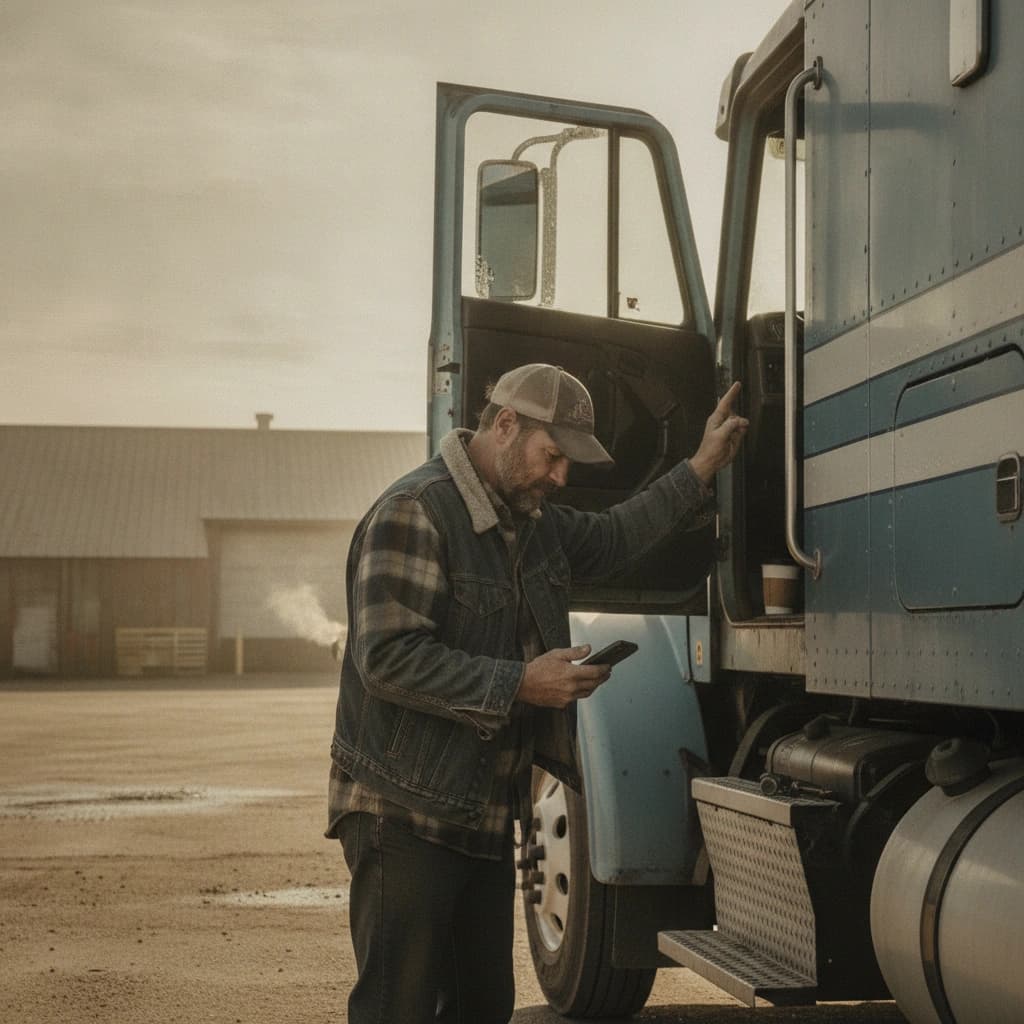
If you run a handful of trucks and you are still doing inspection slips on paper, a quiet regulatory update from this spring is your signal to rethink that. The FMCSA made electronic Driver Vehicle Inspection Reports official, and while the rule does not add a single new requirement, it removes the last bit of doubt about going paperless.
Here is what actually changed, what a DVIR really requires, and what a small fleet should look for before trading the clipboard for an app.
What just changed (and what did not)
On February 19, 2026, the FMCSA published a final rule, effective March 23, 2026, that adds explicit electronic DVIR language to 49 CFR sections 396.11 and 396.13 (docket FMCSA-2025-0115). In plain terms, the regulation now spells out in black and white that a fully electronic inspection report satisfies the requirement.
The important thing to understand is that this is a clarification, not a new burden. Electronic DVIRs were already legal back in 2018 under section 390.32. Carriers who went paperless years ago were already compliant. What the new rule does is erase any lingering ambiguity and make clear that the paperless path is the expected direction, not a gray area you have to defend.
A quick refresher on what a DVIR actually is, since the term gets thrown around loosely. For property-carrying commercial vehicles, a driver vehicle inspection report is required when a defect is discovered or reported. That defect-triggered standard has been in place since the 2014 rule change, and the FMCSA confirmed it will not bring back the old daily no-defect report requirement for property carriers. So if the post-trip walkaround turns up nothing, you are not required to generate a clean report just to file paper.
A few requirements the new rule preserves exactly as they were:
- The report must be retained for 3 months.
- The signature chain of custody stays intact: the driver who reports a defect, and the certification that it was addressed, both have to be captured.
- A reported defect that affects safe operation must be repaired before the truck is dispatched again.
None of that is new. The rule just makes it cleaner to satisfy all of it without a single sheet of paper.
Why paper DVIRs cost a small fleet more than they look
On paper, a paper DVIR looks free. The clipboard is already in the cab. The real cost shows up later, and it lands on the dispatcher.
Think about the failure modes. A slip gets left in the door pocket and never makes it back to the office. A defect note is scrawled in a hurry and nobody can read whether the driver flagged a brake issue or a light. There is no clean record proving the defect was repaired before that truck rolled out again, which is exactly the kind of gap that turns an inspection into a violation.
Then there is the 3-month retention requirement. Meeting it with a clipboard riding around in a truck cab is genuinely hard. The records that matter most in an audit or a dispute are the ones most likely to be sitting crumpled under a seat 200 miles away.
For a small operation, the dispatcher ends up chasing inspection paperwork the same way they already chase bills of lading and signed rate cons. It is one more thing that lives out in the field instead of in the system, one more thing to nag drivers about, one more thing that goes missing right when you need it.
Picture a common scenario. A driver picks up a reefer load of produce on a Tuesday morning, runs a 600-mile lane, and during the pre-trip he notices a marker light out. He writes it on the slip, gets it fixed at the yard, and rolls. Three weeks later that truck draws a roadside inspection and the officer asks for recent DVIRs. If that slip is sitting in a binder back at the office, or worse, never made it back at all, the carrier cannot quickly show the defect was reported and repaired before redispatch. The work was done correctly. The paper just could not prove it. That is the gap that costs small fleets points on their safety profile, and it is almost always a records problem, not a maintenance one.
What a good DVIR app for trucking should do
If you are going to go electronic, the tool has to actually fit how a small fleet works. A DVIR feature that drivers hate or that lives off in some separate app they never open is worse than the clipboard. Here is what to hold any option to.
Capture the inspection on the phone the driver already carries. No extra hardware, no tablet to lose. The driver does the walkaround, taps through the checklist, and attaches a photo of any defect right there at the truck. A photo of a cracked lens or a worn tire is worth more than a hand-written note nobody can read three weeks later.
Keep the records automatically. The 3-month retention should just happen. The signature chain, the defect, the certification it was handled, all of it filed against the right truck and the right day without anyone re-keying it. The system should hold the proof so the dispatcher does not have to.
Tie the inspection to the truck and the day, and flag a defect before redispatch. A reported defect that affects safe operation should be visible to HQ, not buried, so the truck does not roll again until it is addressed. That is the whole point of the report.
And just as important, what a good DVIR tool should not pretend to be. It is not an electronic logging device, and it is not a guarantee of compliance. It is a record-keeping tool that makes the inspection your drivers are already responsible for easier to do right and easier to prove. Any vendor implying their inspection feature makes you automatically compliant is selling you something that does not exist.
What to look for before you go paperless
A few practical filters before you commit to any system. These come straight out of how small fleets actually operate, not a feature checklist.
- It works offline at the yard. Drivers do their walkaround in spots with bad signal all the time. If the app cannot capture an inspection without bars and sync it later, it will fail you on day one.
- It is simple enough that a driver actually completes it. A clean 18-point checklist built on the FMCSA 396.11 items beats a sprawling form drivers rush through or skip. Completion is the whole game.
- HQ can pull the record months later. When a broker disputes something or an auditor asks, you need to surface the right inspection in seconds, not dig through a glovebox.
- It lives where the rest of your dispatch already lives. A standalone DVIR-only app is one more login drivers ignore. The inspection belongs in the same place as the loads and the documents, not bolted on the side.
That last point is the one most small carriers underrate. Tools that do one narrow thing pile up fast, and every separate app is another thing your drivers tune out.
Where Howdy Dispatch is headed on DVIR
To be straight with you about what is shipping and what is not: electronic DVIR is on our roadmap, rolling out this summer inside the driver app, built directly on the FMCSA 396.11 checklist. It is in active development now, not a live feature today, so treat this as a preview of where we are headed, not a present-tense claim.
The reason we are building it into the same dispatch software with a driver app your drivers already use for loads and documents is exactly the point above: the inspection should not be a separate app nobody opens. It should be one more thing the driver handles on the phone they already carry, with the record landing automatically where HQ can find it.
One more thing worth restating plainly, since this topic borders on compliance. Howdy Dispatch is not an ELD, not a freight broker, not a carrier of record, and not a CDL or hours-of-service compliance product. We do not make those claims, and you should be skeptical of any dispatch tool that does. The DVIR work coming this summer is about making a record-keeping job easier and harder to lose, nothing more.
If you want to be on the list when the electronic DVIR rolls out, the founding-carrier program is where to start, and you can try the platform today on a 14-day trial. The fleets that go paperless deliberately, with a tool their drivers actually use, are the ones who stop chasing inspection slips for good.
READ NEXT
The FMCSA Crackdown Is Real. Your Inspection Records Are Now Survival Gear.
The 2026 FMCSA enforcement push is pulling authorities and putting drivers out of service. A tight pre-trip inspection and DVIR habit protects a small fleet.
Where Are My Trucks? Real Fleet Visibility for Small Carriers in a Tight Market
Fleet visibility for a small trucking company should not mean calling drivers every two hours. Here is what live GPS on the dispatcher map actually changes.