
The FMCSA Crackdown Is Real. Your Inspection Records Are Now Survival Gear.
The 2026 FMCSA enforcement push is pulling authorities and putting drivers out of service. A tight pre-trip inspection and DVIR habit protects a small fleet.
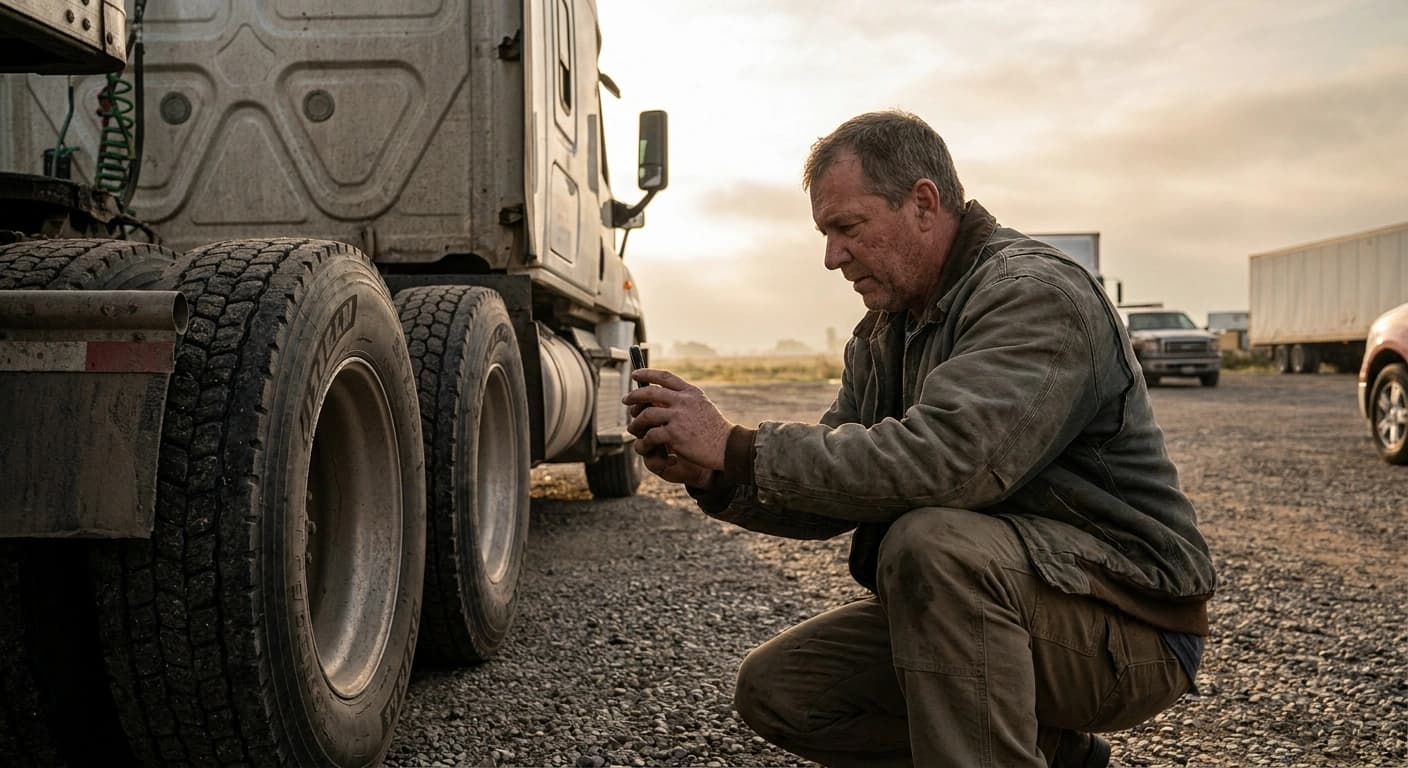
The daily pre-trip inspection just went from a formality to survival gear. In 2026 the FMCSA is running its hardest enforcement cycle in years, and small carriers are the ones getting pulled off the road. The cheapest protection a 5 to 50 truck fleet has is the inspection record it leaves behind every morning.
If your inspections live in a glovebox paper book and a few group texts, you have no fast way to prove a clean history when an auditor, a broker, or an insurer asks. That gap is exactly what the current environment punishes.
Why does the FMCSA crackdown make daily inspections a business issue now?
Because enforcement is up sharply, and the record is the cheapest proof that you run a compliant operation. The 2026 FMCSA push has removed roughly 40,000 non-compliant drivers from service according to industry reporting this year, and small operators are the ones feeling it. Across the 2023 to 2024 freight recession, more than 100,000 carrier authorities were revoked or deactivated, the large majority of them one to five truck operations.
Stack that on a tight market and the stakes rise again. Truckload tender rejections hit 17.55 percent in June 2026, the highest reading since 2022, per the C.H. Robinson freight market update. Capacity is scarce, brokers are picky, and every carrier is being looked at harder. A driver placed out of service in that climate is not a paperwork headache. It is a truck that stops earning and a customer who moves to someone else.
Picture an owner running eight trucks off a paper inspection book and a running text thread. A roadside inspection turns up a defect, and now the question is whether that item was caught, logged, and dated before the truck rolled. With no clean record, the answer is a shrug. A shrug is what turns a minor finding into a serious one.
What does FMCSA 396.11 actually require?
Federal regulation 49 CFR 396.11 requires a driver vehicle inspection report, a DVIR, covering the safety-critical components of the vehicle. In plain terms, the driver inspects the truck and trailer, notes any defect that would affect safe operation, and the carrier keeps the record. Items in scope include brakes, steering, lighting, tires, horn, wipers, mirrors, coupling devices, and emergency equipment, among others.
Two points matter for a small fleet. First, the driver still performs the physical walk-around. No app inspects the truck for you, and any tool that implies otherwise is selling you a liability. Second, the value of a DVIR is not the checklist itself. It is the dated, defensible proof that the walk-around happened and that a defect was either absent or caught and addressed.
There is also a post-trip side that owners forget. The regulation contemplates a report at the end of the day when a driver finds a defect, so the next driver does not roll on a problem nobody flagged. For a small fleet running trucks hard across multiple shifts, that hand-off is where things slip. A defect noticed at delivery and never written down becomes the next driver's out-of-service violation. A record closes that gap.
Paper DVIR book versus an electronic pre-trip inspection app
The paper DVIR book is the status quo, and it fails in predictable ways. It gets left in the other truck. Pages get backfilled at the end of the week from memory. And it carries no photo of the defect the driver actually saw. When a dispute lands weeks later, a scribbled line that says "brakes OK" carries almost no weight.
An electronic record changes the failure mode.
| Record type | What it captures | How it holds up in a dispute |
|---|---|---|
| Paper DVIR book | Handwritten checklist, easy to lose or backfill | Weak, no timestamp, no proof of when it was written |
| Electronic inspection record | Timestamped entry with defect photos | Strong, shows what was inspected and when |
The photo is the part that wins. A dated image of a cracked light lens or a worn tire, captured at the moment of inspection, answers the question that a checkbox cannot. It shows what the driver saw, on that day, before the truck moved.
What a clean inspection trail does in a dispute or a review
A dated, photo-backed inspection history answers three different people without a scramble. It shows the broker you run a tight shop. It gives the insurer a defensible record when a claim is contested. And it hands the auditor exactly what a compliance review asks for, in order, without a frantic search through a cab.
Consider a plausible case. A truck is in a minor yard incident, and three weeks later a claim adjuster wants to know the condition of the brakes and tires that morning. A carrier with a paper book has a checkbox and a memory. A carrier with a timestamped record has a photo of the tires taken at 5:40 that morning, before the truck moved. One of those carriers is arguing. The other is done. That difference is not about being right, it is about being able to prove it, and proof is what a dispute turns on.
You can tighten this up this week without buying anything new. Standardize the walk-around so every driver checks the same items in the same order. Capture it the same way every day, with a photo of any defect and a note of the fix. Store it somewhere that is not a single paper book riding in one truck. The habit is worth more than the tooling, and the habit is free.
The reason to start now rather than after an inspection is simple. A record only helps you if it already exists on the day it is questioned. You cannot build a clean six-month history the week an auditor calls. Fleets that treat the inspection log as an ongoing asset, the same way they treat their maintenance records, are the ones with something to show when it counts. The ones who wait until they are pulled over are building the record too late.
For fleets that want the record built into the same place they already dispatch loads and track trucks, an integrated dispatch software with a driver app keeps the inspection trail next to the load history instead of in a separate silo.
What is coming from Howdy Dispatch
An electronic DVIR with a structured daily checklist and defect photos is rolling out this summer. It will let a driver complete the pre-trip and post-trip inspection on the same iOS app they already use for loads, and attach photos to any defect, so the record is timestamped and stored the moment the walk-around happens.
That builds on what is already live today. Drivers capture pickup, manifest, and delivery photos on the app, and every load carries its own document archive on the HQ side. The DVIR extends that same capture habit to the daily inspection.
One clear boundary. Howdy Dispatch is not an ELD, it is not a freight broker, and it is not a compliance authority. It keeps the record and makes the habit easy. The driver and the dispatcher keep the judgment. No software decides whether a truck is safe to run.
FAQ
Is an electronic DVIR required? No. Section 396.11 requires the inspection report, not a specific format. Paper is legal. An electronic record is simply far harder to lose, backfill, or dispute, which is why fleets under enforcement pressure are moving to it.
Does a driver still have to physically inspect the truck? Yes. The regulation is built around a real walk-around by the driver. Any tool only documents that inspection. It never replaces it.
How does a small fleet start tightening this up today? Standardize the walk-around, capture every inspection the same way with defect photos, and store it outside the cab. Do that first, then add software that makes the habit automatic.
The crackdown is not going to ease up mid-year, and a tight market rewards the carriers that look buttoned up. A clean, dated inspection trail is the least expensive insurance a small fleet can carry right now.
Ready to keep your record airtight? Start a 14-day free trial of Howdy Dispatch and put your inspection habit on the same app your drivers already run.