

Backup Dispatcher Plan: When Your Only Dispatcher Is Out
A backup dispatcher plan for a small fleet: what the fill-in needs on day one, where it should live, and how to test it before your dispatcher is out.
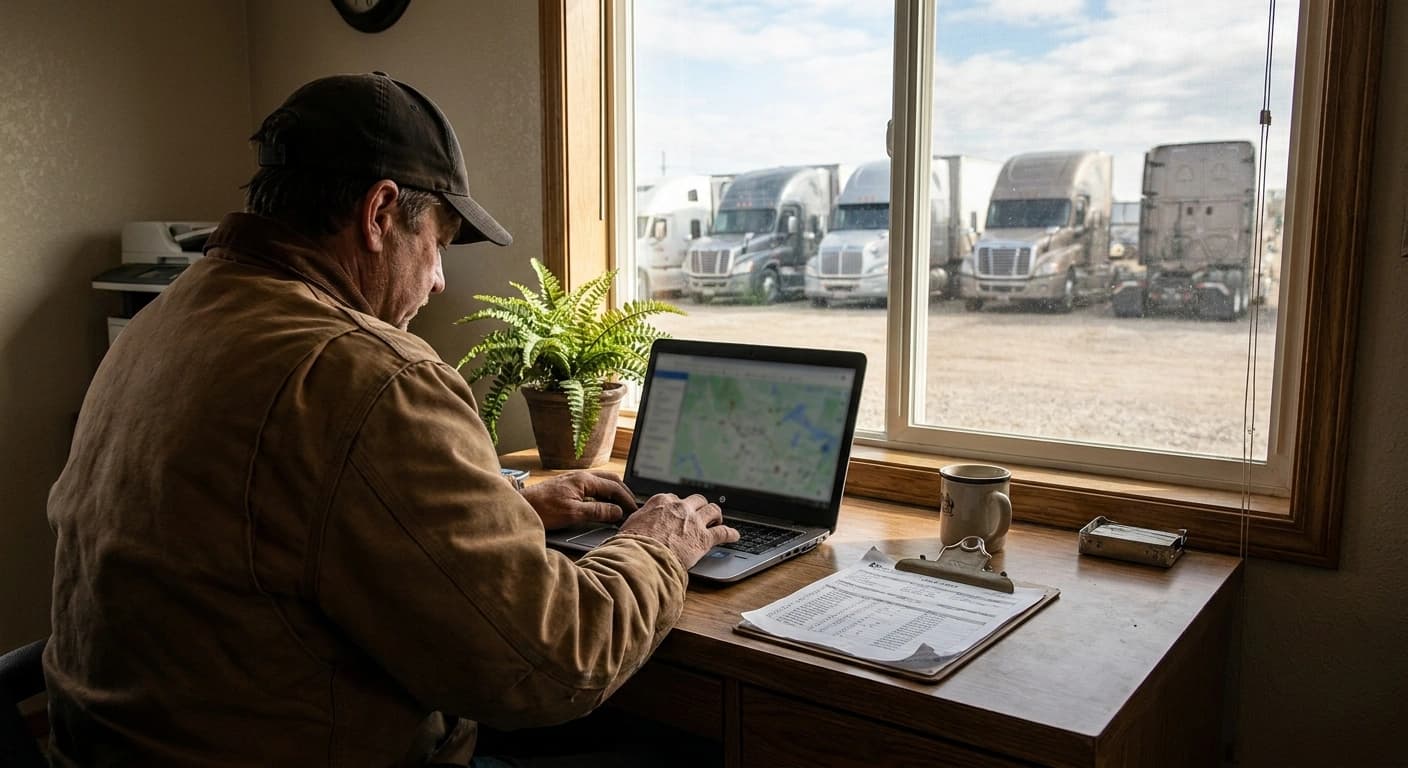
What happens when your only dispatcher is out?
If dispatch lives in one person's phone and inbox, the fill-in starts blind. Loads stall, brokers start calling the owner's cell, and the driver sitting at a dock has nobody to tell. A backup dispatcher plan fixes that with two things: a short written handoff and one shared place where every load, document and open problem already lives, tested on a normal day before anyone is out.
Plenty of fleets of 3 to 15 trucks learn this the hard way. The dispatcher gets the flu on a Monday, or takes the week of Thanksgiving, or gives notice. The owner sits down at the desk and finds out what was never written down: which broker was waiting on a callback, which load had detention terms on page two of the rate con, which driver was told he could take Friday off.
A backup dispatcher is not a second hire. It is a plan that lets someone you already have run the desk for a few days without guessing.
Why is one dispatcher a single point of failure?
A good dispatcher in a small fleet carries a lot in their head, and that is part of why they are good. They know the broker who always pays late and the receiver whose dock closes at 2 p.m. They know which driver handles a tight reload and which one needs the whole story in a text.
None of that is a problem until the day they are gone. Then every piece of memory becomes a phone call nobody can answer. The cost shows up fast:
- A load sits unassigned because nobody saw the rate con land in a personal inbox.
- A driver waits at a shipper for three hours and nobody writes down when he arrived, so the detention conversation with the broker starts with no record.
- A broker calls the main line asking for an ETA, and the person who answers has to call the driver, wait, and call back.
- A breakdown happens on I-35 and the driver texts the one number he always texts.
The fleet did not lose capacity. It lost the one place the information was kept.
What does a fill-in dispatcher need on day one?
Think about the first hour, not the whole week. Your backup should be able to answer five questions without calling anyone:
- What loads are moving today, and what status is each one in?
- Which driver and truck are on each load, and where are they right now?
- What does each rate con say: rate, pickup and delivery windows, the broker contact, any special terms?
- What is open or broken: a driver waiting at a dock, a late appointment, a breakdown, a load nobody has accepted yet?
- Who are the brokers and receivers we deal with most, and how do we reach them?
Then two practical rules. First, the backup needs their own login to every system the dispatcher uses. Nobody should be signing in with the dispatcher's password, and nobody should be texting the dispatcher on sick day for a code. Second, the handoff note should be short. One page of "how we do things here" beats a binder nobody reads. Cover the habits that are not obvious: which brokers want a call instead of an email, which customers need appointment confirmations, and who approves a rate below your floor.
Where should that information live?
Not in a personal inbox. Not in a text thread on one phone. Not in a spreadsheet that one person updates and everyone else is afraid to touch. If you are still on one, we wrote about moving dispatch off a spreadsheet without stalling the trucks.
The rule is simple: if the backup has to ask where something is, the plan has a gap. Everything in the five questions above should sit in one system the owner and the backup can both open, from any desk.
This is where we built Howdy Dispatch to help. Here is what it does today that matters for coverage:
- The rate con travels with the load. Every job can carry its broker rate confirmation PDF and its documents, so a fill-in opens the load instead of searching someone's inbox.
- AI rate-confirmation intake. Drop in a broker's rate con and Howdy Dispatch pre-fills the load, including customer, origin, destination, mileage, rate, pickup and delivery times and the broker contact. The dispatcher reviews and saves. That is the one AI feature we ship today, and you can read more about our AI dispatch platform built on both sides.
- Trucks on a map. The HQ live map shows where every on-shift truck is, so the backup can answer an ETA call without phoning the driver. Off-duty drivers do not ping. We have written more on seeing every truck without calling the driver.
- A red chip for anything stuck. The HQ jobs page flags a load that has waited for driver acceptance for more than 15 minutes, or an incident that is still unresolved. A backup does not need to know the history to see what needs attention first.
- Incidents reach everyone. When a driver reports a breakdown, accident or other incident from the iOS app, it pushes to every dispatcher, admin and owner on the account, not just one phone.
- Detention gets recorded. The detention timer records pickup and delivery wait time against the appointment window. It records the wait; it does not bill the broker. But the record is there when the regular dispatcher is back.
None of that replaces judgment. It just means the backup starts with the facts instead of a scavenger hunt. You can see the dispatcher and driver tools in Howdy Dispatch on one page.
Who should be the backup in a 3 to 15 truck fleet?
Usually not a new hire. In a fleet this size, the backup is almost always the owner or someone in the office who already knows the drivers: the person who does billing, the safety lead, or a driver who came off the road.
Pick one person and name them. "Whoever is around" is not a plan. Then cross-train with a light touch:
- Have the backup book and dispatch one load a week, start to finish, with the regular dispatcher watching.
- Sit them in on one broker call a week so they hear how rates get negotiated and how your fleet says no.
- Introduce the backup to your top two or three brokers by name, so the first call on a sick day is not a stranger.
If your fleet is past 15 trucks, the math may start to favor a second dispatcher instead of a part-time backup, and that is a different decision with its own tradeoffs. We covered what to automate in a small fleet's dispatch before you add headcount.
How do you test the plan before you need it?
Run a normal Tuesday with the roles swapped. The backup dispatches. The regular dispatcher sits nearby and only answers questions.
Write down every question the backup asks. Each one is a gap in the plan. "Where's the rate con for the Dallas load?" means documents are not attached to loads. "Which number does Mike text?" means drivers are reaching a person instead of a system. "Is this broker okay with an email update?" belongs in the handoff note.
Then check the boring parts:
- Does the backup have their own user, and does your plan have a seat for them? In Howdy Dispatch, you add a user by email invitation, and seat limits depend on your plan.
- After the test day, look at the audit log. In Howdy Dispatch it shows who changed what and when, which tells you whether the backup could actually do the work or kept handing it back.
- Fix the gaps, then run the swap again a month later.
A plan you have never tested is a hope. A plan you ran once on a quiet day is something you can lean on during the week of Thanksgiving.
FAQ
Do I need a second full-time dispatcher? Often not, in a small fleet. What many small fleets need first is a named, trained backup and a shared system of record, not a second salary.
What should my dispatcher write down before a vacation? Open loads and their status, anything promised to a broker or driver, appointments in the next three days, and any rate or lane they were in the middle of negotiating. Keep it to one page.
Can drivers reach the backup in Howdy Dispatch? Howdy Dispatch does not have two-way chat today. Drivers get a push notification when they are assigned a load, and an incident report from the driver app pushes to every dispatcher, admin and owner, so it does not depend on one phone.
How do I add a backup in Howdy Dispatch? Send them an email invitation from your account. They get their own login, so nobody shares the dispatcher's password.
What size fleet is this for? Howdy Dispatch is built for fleets of 1 to 50 trucks.
Make the desk work without one person
The day your dispatcher is out is going to come. The fleets that handle it well wrote things down, put every load in one place, and practiced once. Try it on your own loads with Howdy Dispatch plans and the 14-day trial, no payment method required.

READ NEXT
Driver GPS Tracking Off Duty: Where the Map Should Go Dark
Driver GPS tracking off duty costs a small fleet trust and clean data. A shift clock that turns the map off at clock-out keeps both. Here is how to set it up.
Spreadsheet vs TMS: When Small Fleets Should Switch in 2027
Spreadsheet vs TMS in 2027: the signs a 1 to 50 truck fleet has outgrown Excel and group texts, what switching costs, and what to move first.