

Hot Shot Dispatch Software: What to Look For, What to Skip
Hot shot dispatch software for small fleets: rate con entry, a driver app, delivery photos, the ELD question, and software versus a dispatch service.
What should hot shot dispatch software do for a small fleet?
Hot shot dispatch software should do four jobs: take the typing out of load setup, put a driver app in the cab, show the dispatcher where every truck is, and keep each load's paperwork in one place. Howdy Dispatch covers those with AI rate confirmation intake, a one-tap iOS driver app with delivery photos, continuous GPS on the HQ live map, and documents stored on every load.
Just as plainly, here is what it does not do. It does not pick your loads or set your rates, and it is not an ELD. If you want the full list, see the dispatcher and driver tools in Howdy Dispatch.
The rest of this guide is the decision a hot shot owner actually faces: whether you need software or a dispatch service, where the ELD rules come in, and what to test in a 14-day trial when your trucks run short loads all day.
What makes hot shot dispatch different from regular truckload?
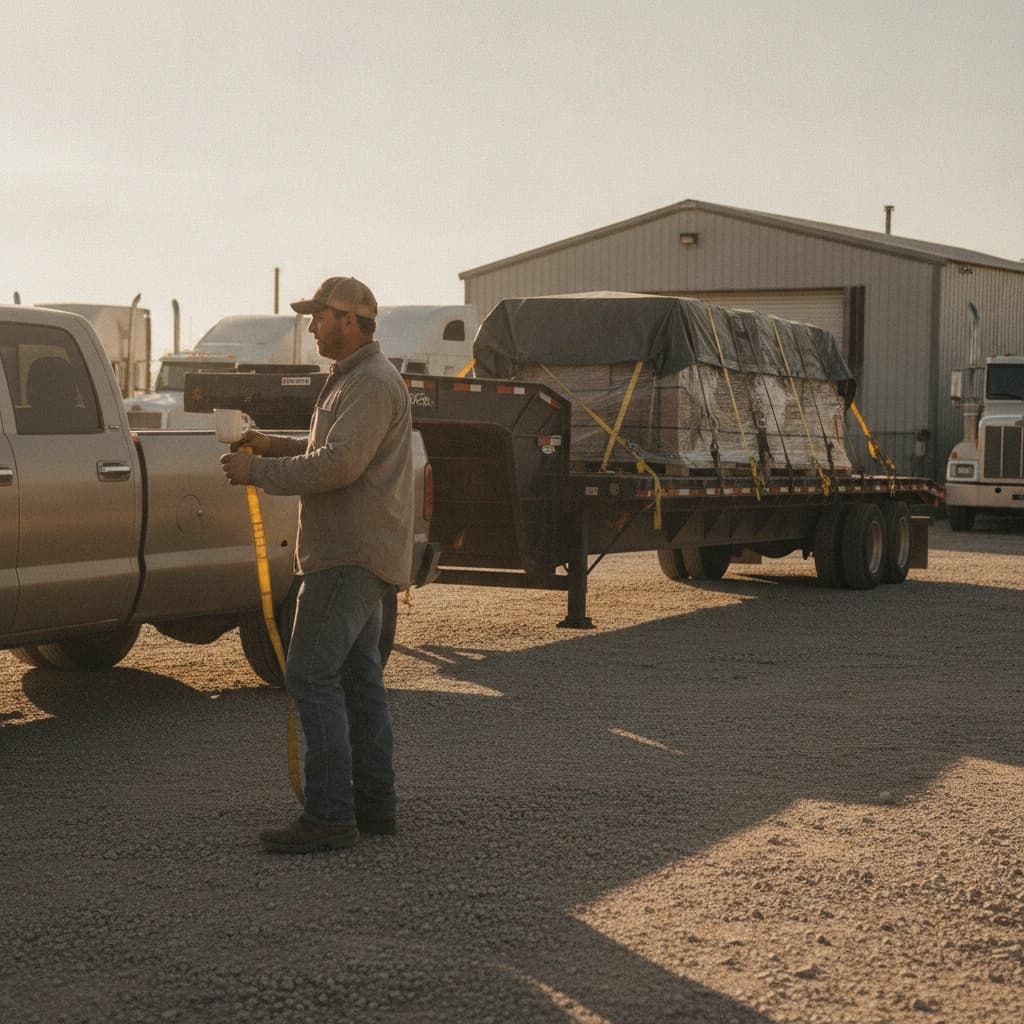
Hot shot work is mostly one-ton duallies pulling goosenecks or bumper-pull flatbeds, hauling freight that is too urgent or too small to wait for a semi. That changes the dispatch job in a few ways:
- Speed of confirmation. The carrier who confirms first and gets a truck rolling usually gets the load.
- More loads per truck. Two or three short runs a day means two or three times the rate cons, pickups and deliveries to track.
- Thin margin per load. One rejected invoice or one unpaid wait hurts more when the load is small.
- The owner is the dispatcher. Often the same person also drives. There is no back office to catch mistakes.
Software sized for a staffed office with a billing department does not fit a three-truck hot shot outfit. What good looks like is smaller and faster.
Is it a software problem or a dispatch service problem?
Search "hot shot dispatch" and you get two different products under one phrase. Sort them out before you compare anything.
- Dispatch software is a system you run yourself. You find the loads, you take the broker call, you decide what to haul. The software handles setup, assignment, tracking and paperwork.
- A hot shot dispatch service is a person or company that finds and books loads for you and charges for it.
- A load board is where loads get posted. Neither of the above replaces it.
Software does not find loads, negotiate rates or take the broker call. A service does, and that is what you are paying for. If you are weighing a service, get the fee structure in writing and turn it into dollars per month at your own load count before you compare it with anything.
Howdy Dispatch is software only. It is not a load board, not a freight broker and not a dispatch service. The dispatcher decides which loads to run.
How much time does load setup really cost at three loads a day?
Every confirmed load starts with a broker rate confirmation: customer, origin, destination, miles, rate, pickup and delivery windows, and a dispatch contact. Somebody has to get all of that into the system before a wheel turns.
Picture a Tuesday. A rate con comes in for structural steel out of a yard in Beaumont going to a job site outside San Antonio, about 280 miles, 875 dollars, pickup by noon, delivery first thing Wednesday. Before you finish keying it, a second broker sends a pallet of fittings from Conroe to Tyler, and a third load is an oilfield skid out of Odessa with a rig crew waiting on it. That is three rate cons before 9 a.m., and every minute spent typing is a minute not spent confirming the next load.
Here is the arithmetic, as an illustration rather than a measured result: at 5 to 10 minutes of typing per rate con, three loads a day is 15 to 30 minutes a day of data entry, every day, before anyone calls with a problem.
With intake on the AI dispatch platform built on both sides, the dispatcher uploads the rate con PDF and the AI pre-fills customer, origin, destination, mileage, rate, pickup and delivery times and broker contact. It auto-matches the customer, driver and truck against your address book and validates the origin and destination addresses. The dispatcher reviews and saves. Five to ten minutes of typing becomes about 20 seconds of review. If you want to see the whole path, here is how rate confirmation intake turns a PDF into a load.
The AI removes typing. It does not choose loads, set rates or route trucks.
What does the driver app need to do at a pickup?
A hot shot driver is not going to fight a clunky app on a gravel lot. The driver side has to be quick and forgiving:
- Push on assignment, so the driver knows about the load without a phone call.
- One-tap pickup with a load photo and manifest photo capture, so the paperwork is on the load from the start.
- One-tap delivery with a delivery photo, which is what you pull up when a broker questions the drop. If damage is ever in dispute, it helps to know which photos that hold up in a cargo damage claim look like.
- An offline outbox, so a status tap made with no signal on a rural road queues on the phone and sends when the signal comes back.
- A shift clock that keeps GPS off when the driver is off duty, so dispatch only sees the truck on the clock.
The driver app is invite only. The carrier invites its drivers, so the dispatcher starts the trial on the web and sends the invites from there. Drivers cannot sign up on their own.
Do hot shot trucks need an ELD, and where does dispatch software fit?
This section is education from the federal text, not legal advice. Confirm your own operation with FMCSA or a compliance professional.
The hours-of-service rules start with whether the truck is a commercial motor vehicle. Per 49 CFR 390.5 on Cornell LII, fetched 2026-10-06, one way a vehicle qualifies is a gross vehicle weight rating or gross combination weight rating, or actual gross weight, of 10,001 pounds or more, used in interstate commerce. A dually pulling a loaded gooseneck can reach that number fast, so do the math on your own rating.
Next is the short-haul exception. Per 49 CFR 395.1 on Cornell LII, fetched 2026-10-06, paragraph (e)(1) applies when the driver:
- operates within a 150 air-mile radius (172.6 statute miles) of the normal work reporting location,
- returns to that location and is released from work within 14 consecutive hours, and
- for a property-carrying driver, has at least 10 consecutive hours off duty separating each 14 hours on duty.
The carrier keeps time records for 6 months showing the time the driver reported, total on-duty hours and the release time each day. What that exception does and does not excuse for your trucks is a question for FMCSA or your compliance advisor, not a blog post.
Where software fits: Howdy Dispatch is not an ELD. Its HOS v1 is a driver self-report, not FMCSA-certified ELD output and not a Part 395 record. If your drivers need an ELD, you still need one from a certified provider.
What does a 14-day trial test for a hot shot carrier look like?
A trial is only useful if you run real loads through it. Here is a short test plan for a hot shot fleet:
- Time three real rate cons through intake. Note how long the review takes on each, and what you had to correct.
- Assign one load end to end. Have the driver take the pickup, manifest and delivery photos, then open the load in HQ and check that everything landed on it.
- Log a wait at the dock. The detention timer records pickup and delivery wait time against the appointment window with the grace period you set. It records the wait; it does not bill the broker. More on starting the detention clock at the dock.
- Capture one lumper receipt. The driver photographs it, enters the amount and how it was paid, and HQ shows the per-load total. Records and totals only, no invoicing.
- Watch the board. Check the trucks on the HQ map, and leave a load unaccepted to see the red stale-pending chip show up after 15 minutes.
On price, the pricing page (fetched 2026-10-06) lists Standard at $149 a month for 1 truck, Pro at $745 a month for 5 trucks with 2 dispatcher seats and up to 5 driver accounts, Advanced at $1,990 a month for 10 trucks, and custom pricing above that. There is no 3 or 4 truck plan, so a fleet that size should compare the 1-truck and 5-truck plans against its own count. Every plan starts with a 14-day free trial, no payment method required.
If you are still narrowing vendors, here is how to choose a TMS for a small fleet, starting with what each one charges for.
FAQ
What is hot shot dispatch software? A system a hot shot carrier runs to set up loads, assign drivers and trucks, track trucks and keep load paperwork. It is different from a dispatch service, which books loads for you.
Does hot shot dispatch software find loads? Not this kind. Howdy Dispatch does not find loads, negotiate rates or act as a broker. You still use your load boards and broker relationships.
Do I need an ELD for a hot shot truck? It depends on whether the truck is a commercial motor vehicle under 49 CFR 390.5 and whether your drivers meet an exception such as 395.1(e)(1). Read the text and confirm with FMCSA. Howdy Dispatch is not an ELD.
How much does dispatch software cost for a 3 truck hot shot fleet? Plans are fixed bundles of 1, 5 or 10 trucks, from $149 a month for one truck to $745 a month for five. Check the current numbers on the pricing page. For how that stacks up against other one-truck options, see our comparison of the best TMS for owner-operators, with vendor prices dated November 2026.
Can drivers sign up themselves? No. The driver app is invite only. The dispatcher starts the trial and invites the drivers.
Try it on your next three loads
If the back office is starting to slow down the speed that makes hot shot pay, run your next three rate cons through a trial and time them. You can be set up within 48 hours. See Howdy Dispatch pricing and start the 14-day free trial, no payment method required.

READ NEXT
AI for Trucking Dispatchers: What's Real, What's Vapor, and What's Worth Paying For
An honest take on AI for trucking dispatchers in 2026. What actually saves time today, what's still a pitch, and how to evaluate any 'AI dispatch' claim.
Dispatch Software Pricing for Small Fleets: What You Pay
Dispatch software pricing for small fleets of 1 to 50 trucks: per-truck vs per-seat vs flat tiers, hidden fees, and how to compare quotes.