

FIELD NOTES
FROM THE YARD.
Dispatch, drivers, brokers, paperwork. Honest writing for small fleets.
TMS With QuickBooks Integration: What a Small Fleet Needs
Does your TMS need a QuickBooks integration? What a sync moves, when a 1 to 50 truck fleet needs one, and when clean load records are enough.
How to Choose a TMS for a Small Fleet in 2027
How to choose a TMS in 2027 for a fleet of 1 to 50 trucks: what each vendor charges for, what to test, and which questions decide it before you sign.
Carrier TMS vs Broker TMS: Which One a Small Fleet Needs
Carrier TMS vs broker TMS: one runs your own trucks and drivers, the other moves freight on other carriers' trucks. Which a 1 to 50 truck fleet needs.
Cloud-Based TMS for a Small Fleet: What to Check
A cloud-based TMS means no server to run, but it is not all the same. What a 1 to 50 truck fleet should check before it trusts loads to one.

Load Board vs TMS: What Each One Does for a Small Fleet
Load board vs TMS: a load board finds freight, a TMS or dispatch system runs it after the rate con lands. Here is what a 1 to 50 truck fleet needs.
Trucking Software Budget for a Small Fleet: What to Pay For
A trucking software budget for a 1 to 50 truck fleet: how vendors price dispatch, where tools overlap, and how to avoid paying twice for the same job.
Backup Dispatcher Plan: When Your Only Dispatcher Is Out
A backup dispatcher plan for a small fleet: what the fill-in needs on day one, where it should live, and how to test it before your dispatcher is out.

Dispatch Software Demo: What to Ask Before You Sign Up
A dispatch software demo shows the vendor's best day. What a fleet of 1 to 50 trucks should bring, ask and watch for before choosing dispatch software.

How to Cut Check Calls in a Small Trucking Fleet
Check calls eat a dispatcher's day. How small fleets of 1 to 50 trucks cut them by getting load status from the driver app instead of the phone.

Dispatch Software Free Trial: What to Test in 14 Days
A dispatch software free trial goes fast. What a small fleet should test in two weeks, from real rate cons to driver photos, before a card goes in.

How Long Does Dispatch Software Take to Set Up?
How long does dispatch software take to set up for a small fleet? What setup really involves, what slows it down, and how to switch without losing a week.

Dispatch Software for 25 Trucks: What Changes After 10
Dispatch software for 25 trucks: what changes when several dispatchers share one board, and the roles, audit log and alerts a growing fleet needs.

Self-Dispatch vs Hiring a Dispatcher for a Small Fleet
Self-dispatch vs hiring a dispatcher for a small fleet: when the owner runs the board, when a dispatcher pays for itself, and what software changes.

Load Management Software for Small Trucking Fleets
Load management software for a 1 to 50 truck fleet: what a load record should hold from rate con to delivery photo, and what to buy now versus later.

Q4 Peak Season 2026: A Small Carrier's Dispatch Plan
Q4 peak season for a small carrier in 2026: trucks are short, ratios are up, and diesel peaked at $6.53. What a 5 to 20 truck fleet changes in dispatch now.

Driver GPS Tracking Off Duty: Where the Map Should Go Dark
Driver GPS tracking off duty costs a small fleet trust and clean data. A shift clock that turns the map off at clock-out keeps both. Here is how to set it up.
Driver Turnover Cost for a Small Fleet in a Tightening Market
Driver turnover cost for a small fleet: ATRI puts small-fleet turnover at 32% vs 70.7% at mega carriers. What one lost driver really costs a 10-truck fleet.

FMCSA English Proficiency Rule: What a Small Fleet Does Now
FMCSA wants English language proficiency enforcement in its out-of-service rules. What it says, the Oct 9 comment deadline, and how a small fleet plans ahead.

Detention Time Tracking App: Start the Clock at the Dock
A detention time tracking app for truckers only helps if the clock starts at the dock. See what a usable record holds and how Howdy Dispatch keeps it.
Your ELD Got Revoked: A Small Carrier's Replacement Plan
ELD revocation replacement deadline for a small carrier: FMCSA pulled five more devices with an October 6, 2026 cutoff. Here is the plan for the 60 days.

Tender Rejection Rate: What 14% Means for a Small Carrier
Tender rejection rate hit 14.4% in September 2026. What a rejected tender is, why it lands on a small carrier's phone, and how to take it without losing money.

Broker Transparency Rule: What Your Load File Must Hold
Broker transparency rule update: what 49 CFR 371.3 already gives a small carrier, what the 48-hour proposal adds, and the load file to keep on your side.
Why Drivers Decline Loads: Log the Reason, Reassign Faster
Why drivers decline loads, and why nobody writes it down. Tender rejections held at 13.45% on September 10. Structured rejection reasons speed up the reassign.
Diesel Price Spike: What It Does to a Small Fleet's Margin
Diesel near $5.60 a gallon changes which loads pay. The margin math behind a diesel price spike for a small carrier, and the paperwork that gets it paid.
The Blurry BOL Photo Problem: Fix It at the Dock
The blurry BOL photo problem costs a small fleet the whole invoice, weeks later. How to catch a bad bill of lading photo at the dock, not in the office.
Empty Miles Per Loaded Mile: What Deadhead Costs Now
Empty miles per loaded mile is the number most small fleets never run. With rates and costs both at record levels, here is the math and what it changes.

Dispatch Board Best Practices: Sort by Who Is Blocked
Dispatch board best practices for a small fleet: why sorting by pickup date hides the loads that are stuck, and what a dispatcher should sort by instead.

Real-Time Truck Location: Book the Reload Before It Sits
Real-time truck location tells a dispatcher when to book the reload. With diesel at $5.31 a gallon in late July, guessing costs a small fleet real money.
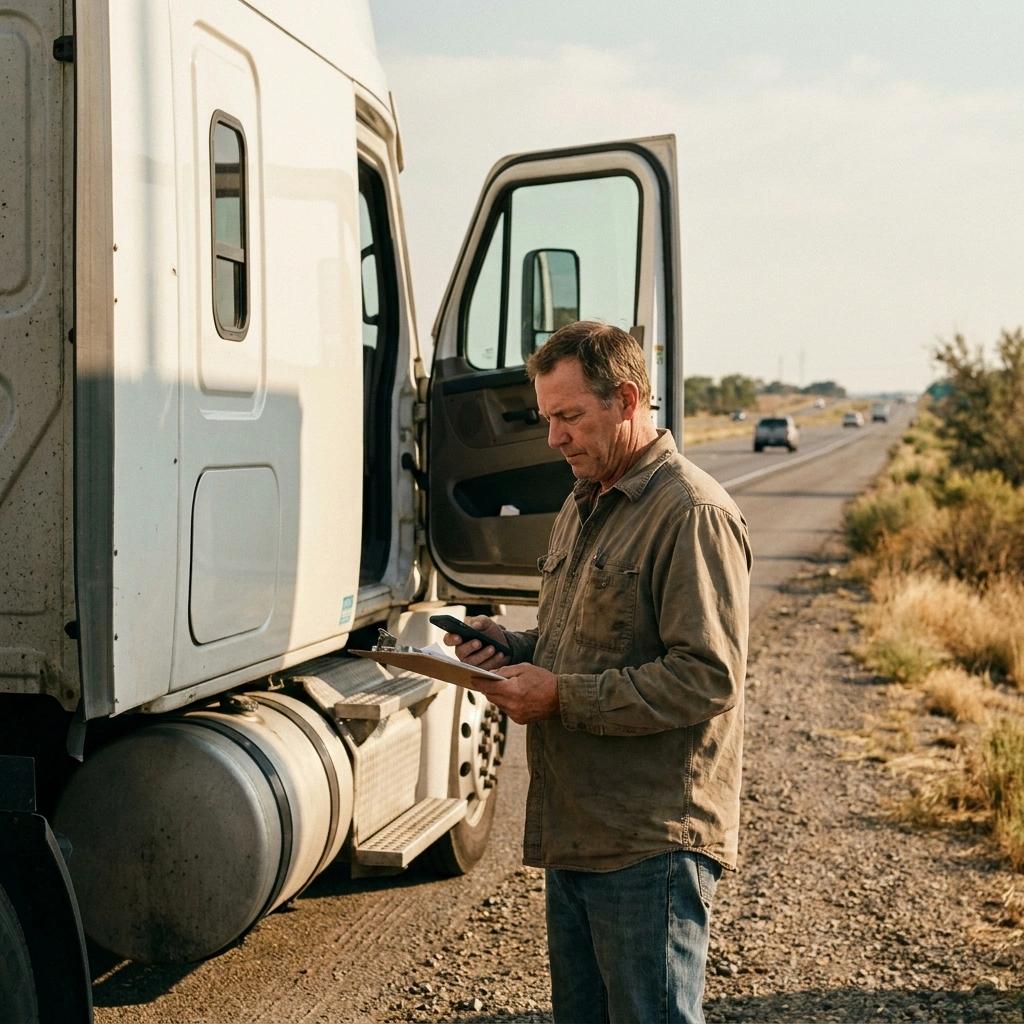
Roadside Inspection Documents Every Small Fleet Needs
Roadside inspection documentation for a small fleet: what your driver has to produce, what lives in the cab, and what has to be one tap away for dispatch.

When the Driver App Loses Signal: The Offline Outbox
Rural dead zones break most trucking driver apps. Here is how offline status updates queue on the phone and drain on reconnect, so no load record is lost.

What a Driver Job Notification App Actually Fixes
A driver job notification app closes the dead time between booking a load and the truck rolling. Here is what that gap really costs a small fleet today.
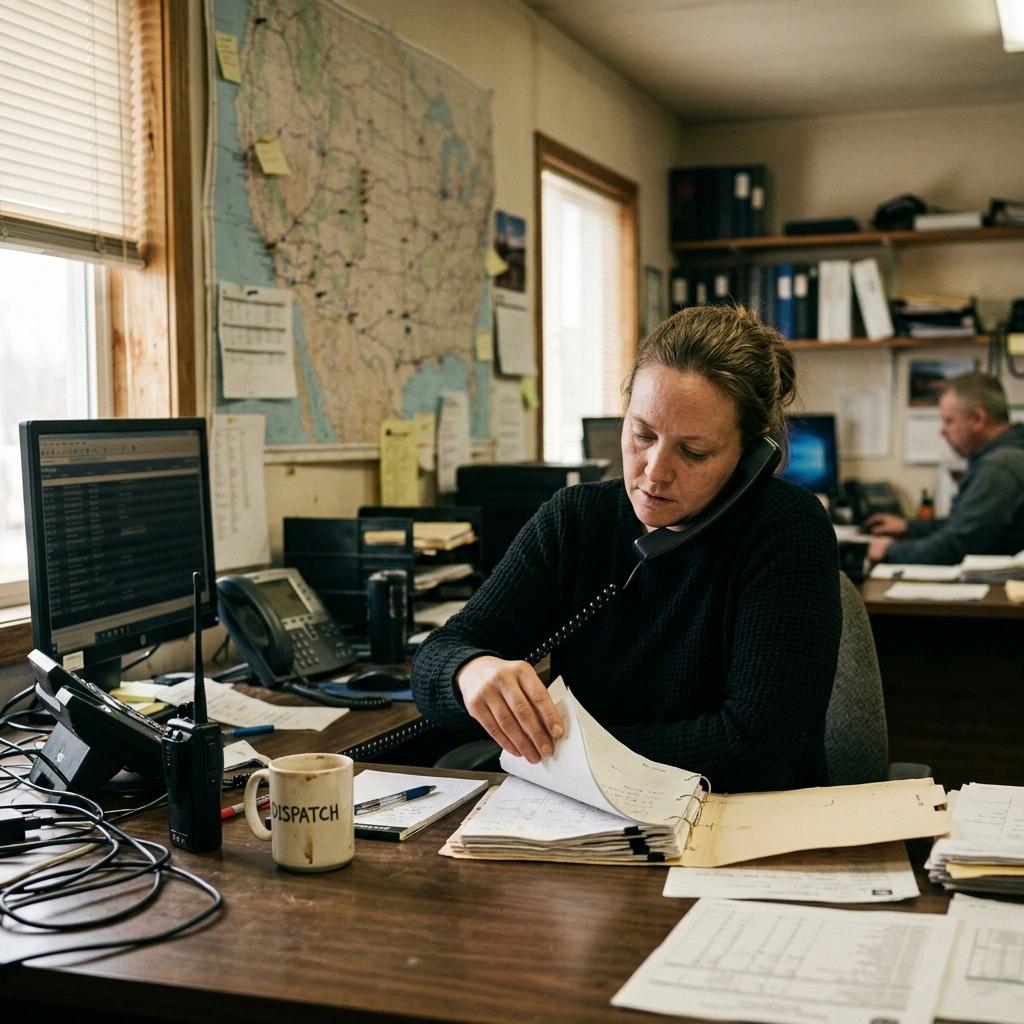
Why Brokers Vet Small Carriers Harder in 2026
Broker carrier vetting tightened for small fleets in 2026 after a $604M verdict. What brokers check now, and how to be the carrier they can defend picking.

Cargo Damage Claim Photos: What Actually Decides Who Pays
A cargo damage claim can land nine months after delivery. Here is what the law asks a trucking carrier to prove, and which load photos decide who pays.
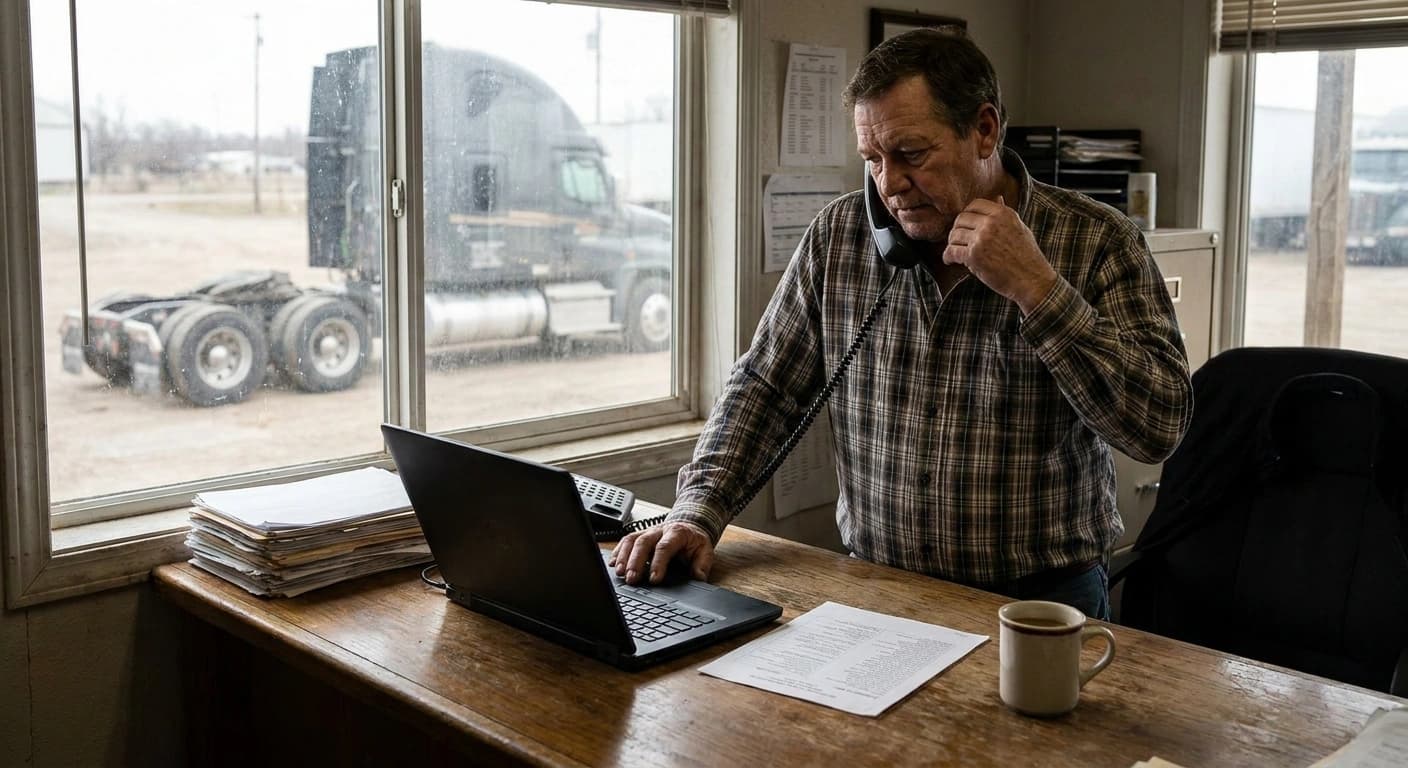
Negotiating Rates With Brokers as a Small Carrier
Dry van spot rates crossed contract in June 2026, then slid back by late July. Here is what actually moves a broker on rate when you run 5 to 20 trucks.

Assigning Loads to Drivers: The Margin Math Nobody Runs
With 10.93 loads per truck, a small fleet's problem is not finding freight. It is picking the right load for the right driver. Here is the math.
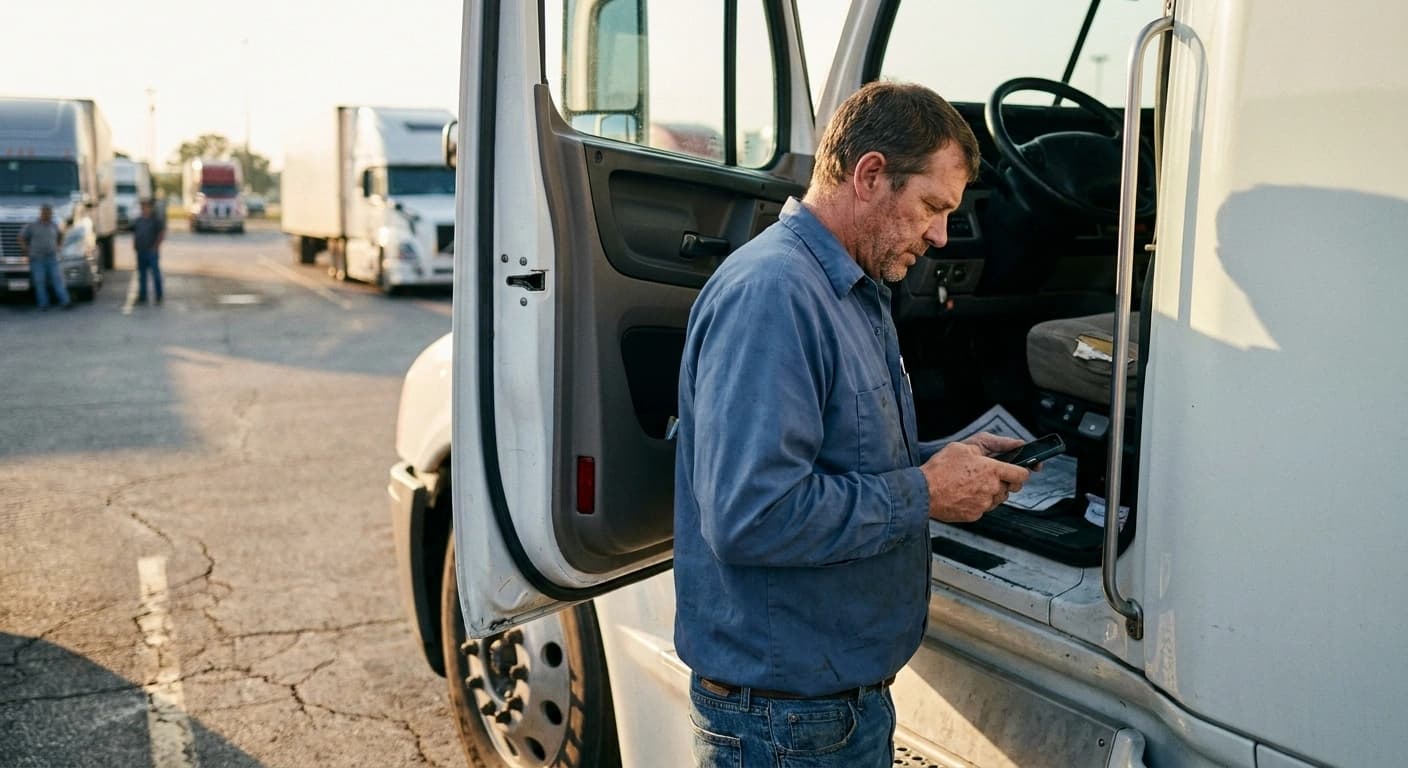
Best TMS for Owner-Operators in 2027: What to Buy First
Best TMS for owner operators in 2027: what one to five trucks need first, what five vendors charge as of November 2026, and what to skip for now.

Driver Onboarding: The First 90 Days Decide Retention
Industry reporting says about a third of new truck drivers quit within 90 days. Here is what a small fleet actually controls in those three months.

Freight Fraud in 2026: Your Load File Is the Defense
Cargo theft dipped in early 2026 while fraud schemes climbed. What a small carrier can actually prove about a load is now most of the defense.

Lumper Receipt Tracking: Stop Losing Money at the Dock
Lumper fees run $150 to $400 a stop and are reimbursable with a receipt. Here is how a small fleet stops losing that money on every load.
Driver Incident Reporting App: The First Hour Decides
A driver incident reporting app captures the accident, breakdown, or DOT stop while the driver is still there. Why the first hour decides the paperwork.

Dispatch Software With a Driver App: Why You Need Both Sides
Most trucking dispatch software is an HQ dashboard drivers ignore, or a driver app with no HQ side. Why a small fleet needs both in one platform.

The Tech You Hand a Driver Is Part of the Job
In-cab technology and driver retention: why the app you hand a driver shapes whether he stays, and what a small fleet should fix in the first 90 days.

AI Rate Confirmation Parser: Turn a Broker PDF Into a Booked Load
An AI rate confirmation parser turns a broker rate-con PDF into a pre-filled load in about 20 seconds, so a small fleet stops retyping every load.

Dispatch Automation ROI When Every Load Books in 15 Minutes
Dispatch automation ROI for small fleets in 2026: spot rates are up and the best loads go to whoever books fastest. Here is what the math looks like.

The FMCSA Crackdown Is Real. Your Inspection Records Are Now Survival Gear.
The 2026 FMCSA enforcement push is pulling authorities and putting drivers out of service. A tight pre-trip inspection and DVIR habit protects a small fleet.

Spot Rates Just Passed Contract for the First Time Since 2022. Here Is How a Small Carrier Wins the Best Loads
Spot rates topped contract for the first time since 2022. Here is how a small carrier wins the best spot loads on speed and clean per-load documentation.

Why Your Drivers Won't Use the App (and How a Small Fleet Actually Gets Adoption)
Most trucking driver apps die from non-adoption, not features. Here is why small-fleet drivers ignore apps, and the checklist to get them actually using one.

The Broker Asked Where Your Truck Is. The Fleets That Answer in Ten Seconds Get the Next Load.
Brokers now expect real-time location and ETA, not a callback. Here is how a small fleet answers where is my truck in seconds and earns repeat loads.

The 15-Minute Load: Why an AI TMS Is How a Small Fleet Wins the Best Freight in 2026
In a record-rate 2026 freight market, the fastest small fleet wins the load. Here is what an AI TMS actually automates so a carrier can respond in minutes.

Where Rate Confirmations Go to Die: Storing Every Load's Paperwork in One Place
Rate confirmation storage for small fleets: why load paperwork gets lost, what good per-load storage looks like, and how to keep the proof that gets you paid.
Hot Shot Dispatch Software: What to Look For, What to Skip
Hot shot dispatch software for small fleets: rate con entry, a driver app, delivery photos, the ELD question, and software versus a dispatch service.
Drivers Won't Open a Dashboard: What a Trucking Driver App Has to Get Right
Most trucking software dies because drivers ignore the app. Here is what a driver app has to get right, and the one-tap load flow Howdy Dispatch ships today.

All-in-One Trucking Software: Why a Small Fleet Should Stop Stitching Tools Together
All-in-one trucking software for a small fleet means dispatch and the driver app come from one vendor. Here is why that beats stitching point tools together.

The Small-Fleet Dispatcher's Daily Checklist for a Tight 2026 Freight Market
Spot rates are at record highs and capacity is tight. Here is the daily dispatcher checklist that keeps a small fleet booking, paid, and paperwork clean.

Detention Pay Is on the Table. The Fleets That Collect It Can Prove the Clock.
Most small fleets charge detention but collect it less than half the time. Here is the timestamped paper trail that actually wins a detention claim.

Record Rates, Same Office: What a Small Fleet Should Automate First
Trucking dispatch automation for small fleets in a record-rate market. What to automate first to cover more loads and lift throughput without a second hire.

Where Are My Trucks? Real Fleet Visibility for Small Carriers in a Tight Market
Fleet visibility for a small trucking company should not mean calling drivers every two hours. Here is what live GPS on the dispatcher map actually changes.

Spot Rates Just Hit an All-Time High. The Fleet on Spreadsheets Is Leaving Money on the Dock.
With spot rates at record highs in mid-2026, the small fleet still running dispatch on Excel and group texts cannot say yes fast enough. Here is the fix.
The FMCSA Just Made Electronic DVIRs Official. Here Is What a Small Fleet Should Do About It.
The FMCSA final rule on electronic DVIRs took effect March 2026. Here is what a DVIR app for trucking must get right before a small fleet goes paperless.

Four Documents Win a Freight Dispute. Three of Them Die in a Driver's Camera Roll.
When a broker disputes an invoice, the carrier with the paperwork wins. Here is why BOLs and PODs vanish into a phone, and how a real driver app fixes it.

Dispatch Software Pricing for Small Fleets: What You Pay
Dispatch software pricing for small fleets of 1 to 50 trucks: per-truck vs per-seat vs flat tiers, hidden fees, and how to compare quotes.

AI for Trucking Dispatchers: What's Real, What's Vapor, and What's Worth Paying For
An honest take on AI for trucking dispatchers in 2026. What actually saves time today, what's still a pitch, and how to evaluate any 'AI dispatch' claim.
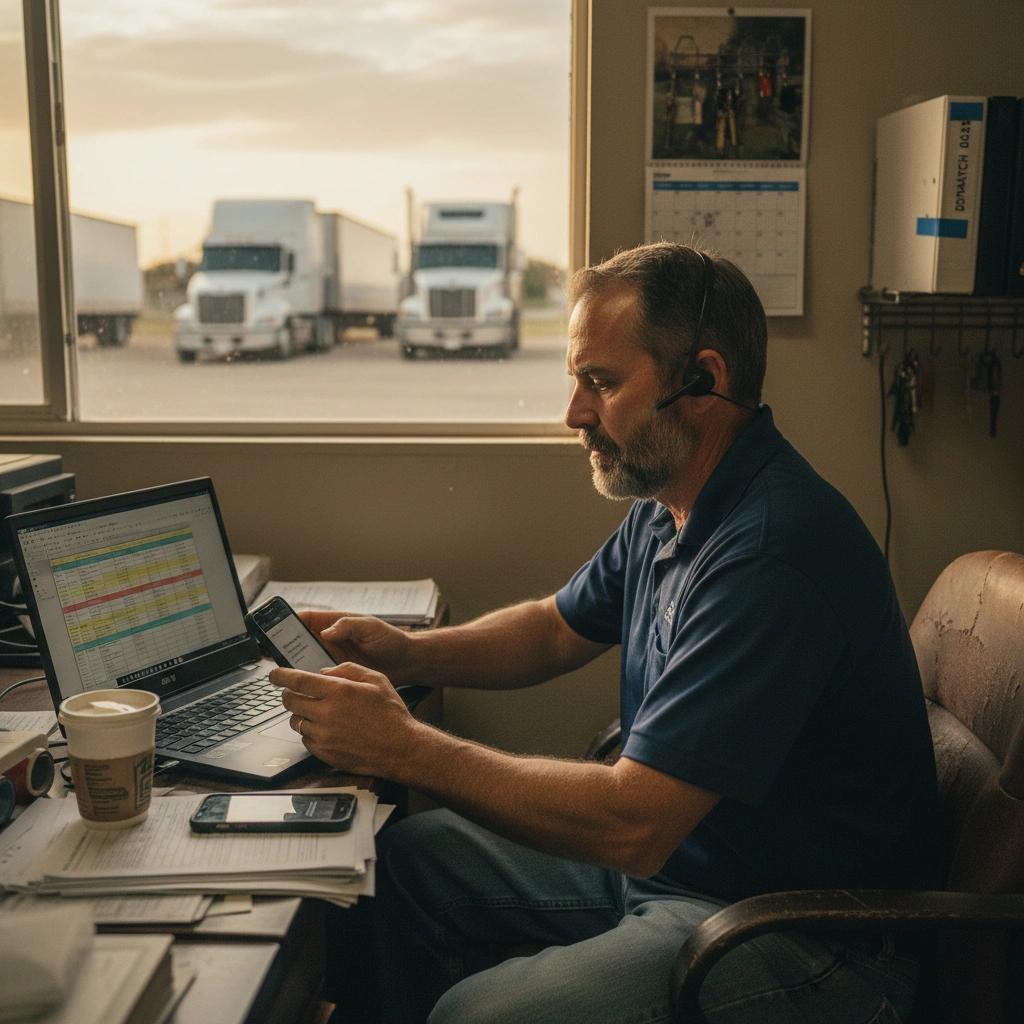
Spreadsheet vs TMS: When Small Fleets Should Switch in 2027
Spreadsheet vs TMS in 2027: the signs a 1 to 50 truck fleet has outgrown Excel and group texts, what switching costs, and what to move first.
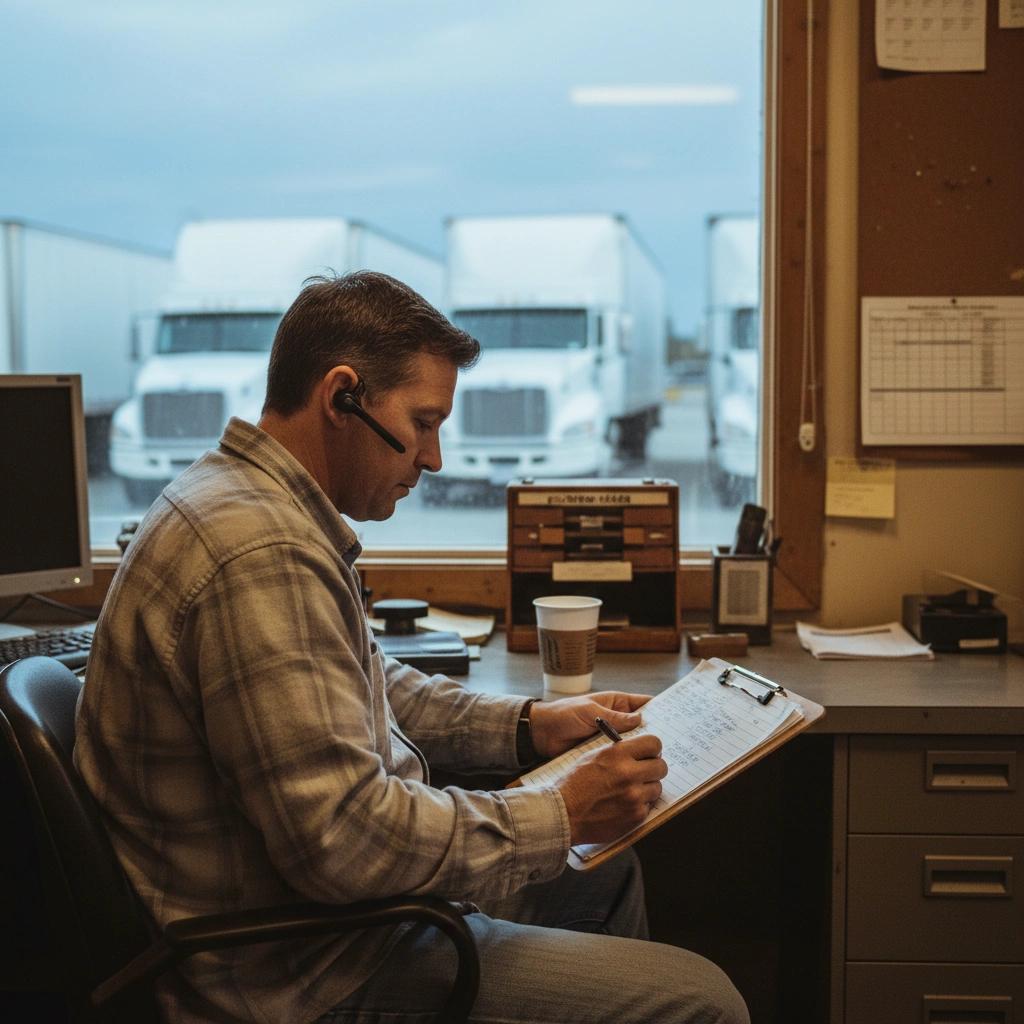
Best Dispatch Software for Small Trucking Companies: 2027
Best dispatch software for small trucking companies in 2027: what five carrier tools charge on their own pages, and how a 1 to 50 truck fleet chooses.

Dispatch Software for 10 Trucks: What a Small Fleet Actually Needs (and What's Overkill)
What dispatch software for 10 trucks should actually do, what's overkill from enterprise TMS vendors, and how to keep paperwork tight without spreadsheets.